Why Pregnancy Back Pain Is So Common (And So Misunderstood)
If your lower back has been making its opinions known since your bump started showing, you are in excellent company. Back pain is one of the most frequently reported complaints during pregnancy, affecting somewhere between 50 and 80 percent of pregnant women at some point across the nine months. Yet despite how widespread it is, back pain is often dismissed as something to simply endure, a normal side effect of growing a human being.
That framing is not entirely wrong, but it is incomplete. While some degree of back discomfort is genuinely expected, significant pain that disrupts your sleep, limits your movement, or affects your daily life is worth taking seriously. More importantly, there is a great deal you can actually do about it. This guide breaks down why pregnancy back pain happens, how to tell the different types apart, and which evidence-based strategies offer real, lasting relief.
The Anatomy Behind the Ache
Pregnancy creates a cascade of physical changes that place new demands on your spine, pelvis, and the muscles that support them. Understanding what is happening in your body is the first step toward working with it rather than against it.
Your Centre of Gravity Shifts
As your uterus grows, your centre of gravity moves forward. To compensate, many women unconsciously lean back, increasing the curve in the lumbar spine, the lower back region. This exaggerated curve, called lordosis, puts sustained pressure on the facet joints and surrounding muscles, which can lead to that deep, aching pain many women feel by the second trimester.
Relaxin Does Its Job
Your body produces a hormone called relaxin throughout pregnancy, with levels peaking in the first trimester. Relaxin's job is to loosen the ligaments in your pelvis to prepare for childbirth, but it does not confine its effects neatly to the pelvis. Ligaments throughout your body become more lax, which means your joints have less inherent stability. Muscles and other soft tissues have to work harder to compensate, and when they fatigue, pain follows.
Pelvic Girdle Pain vs. Lower Back Pain
These two conditions are frequently lumped together, but they are distinct and respond to slightly different approaches. Lower back pain typically presents as a dull ache in the lumbar region, often worsened by prolonged standing or sitting. Pelvic girdle pain (PGP) involves the sacroiliac joints, the symphysis pubis, or both, and tends to feel more sharp or asymmetrical. Women with PGP often notice pain with walking, climbing stairs, or turning over in bed.
"Pelvic girdle pain affects up to one in five pregnant women and is one of the leading causes of sick leave during pregnancy, yet it remains significantly undertreated. Early physiotherapy input makes a meaningful difference to outcomes."
- Dr. Mira Patel, PhD, MCSP, Specialist Women's Health Physiotherapist, King's College London
If you are unsure which type you are dealing with, a women's health physiotherapist can assess your movement patterns and give you a clearer picture. This is genuinely worth pursuing, not just struggling through.
Evidence-Based Strategies That Actually Help
The good news is that the research on pregnancy back pain has moved well beyond "rest and see how it goes." Multiple interventions have solid evidence behind them, and combining a few tends to work better than relying on just one.
1. Targeted Movement and Exercise
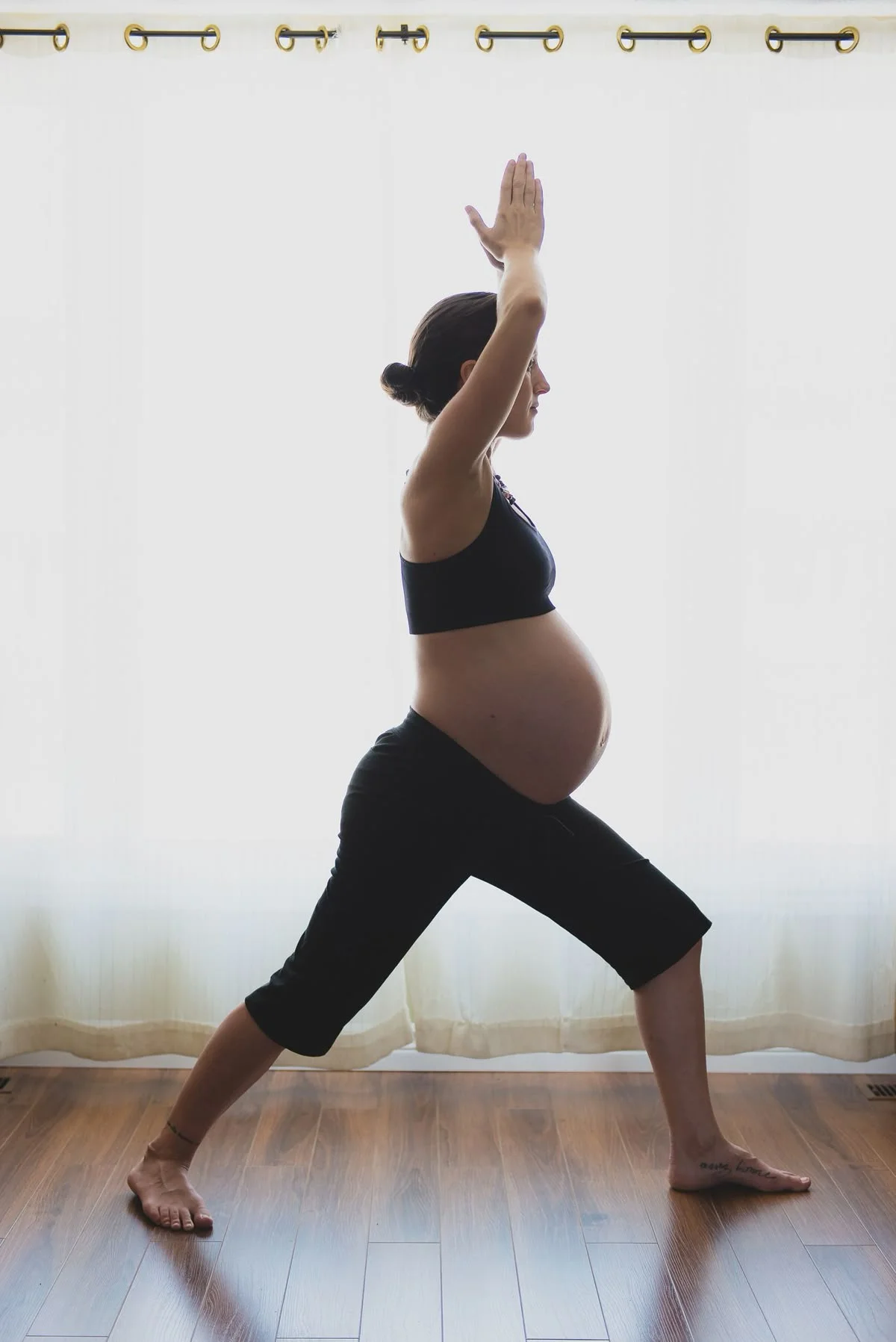
It can feel counterintuitive to move more when your back hurts, but staying active is consistently one of the most effective interventions for pregnancy-related back pain. A review published via the National Institutes of Health found that exercise programs, particularly those focusing on strengthening the core and stabilising the pelvis, significantly reduced both the intensity and duration of back pain during pregnancy.
Focus on gentle, controlled movements rather than high-impact activity. Useful options include:
- Pelvic tilts: Lie on your back (if comfortable in your trimester) or stand against a wall. Gently flatten the lower back by engaging your abdominals, hold for a few seconds, then release. This strengthens deep core muscles without straining the spine.
- Cat-cow stretches: On hands and knees, alternate between arching and rounding your back in a slow, controlled rhythm. This mobilises the lumbar spine and releases tension through the paraspinal muscles.
- Side-lying hip abduction: Lie on your side with knees slightly bent and slowly lift the top leg. This targets the gluteus medius, a muscle that, when weak, contributes significantly to both back pain and pelvic instability.
- Swimming or water walking: The buoyancy of water offloads the spine beautifully. Many women find water-based exercise gives them relief within a single session.
2. Physiotherapy and Manual Therapy
A physiotherapist trained in women's health can assess your posture, identify muscle imbalances, and design a program tailored to your specific presentation. Manual therapy techniques, including hands-on mobilisation of stiff joints, can provide meaningful short-term relief and are considered safe during pregnancy when delivered by a qualified practitioner.
The Eunice Kennedy Shriver National Institute of Child Health and Human Development supports the recommendation that musculoskeletal complaints in pregnancy should be addressed proactively, as untreated pain can affect sleep, mood, and overall wellbeing in ways that compound over time.
3. Posture Awareness Throughout the Day
Small postural habits, repeated dozens of times daily, add up to significant cumulative strain or significant cumulative relief, depending on which direction you nudge them.
- When standing, distribute your weight evenly between both feet rather than shifting onto one hip
- At a desk, ensure your screen is at eye level and your lower back has support, use a small lumbar cushion if needed
- When lifting (even light objects), bend at the knees and keep the load close to your body
- Avoid standing for prolonged periods; if unavoidable, rest one foot on a low stool to reduce lumbar strain
- When getting out of bed or up from a chair, roll to your side first and use your arms to push up
4. Sleep Position and Mattress Setup
Sleep can become a battleground when back pain is present. Sleeping on your side, specifically the left side in later pregnancy, is recommended for circulation reasons, but a good pillow arrangement makes an enormous difference for comfort. Placing a pillow between your knees aligns the hips and reduces rotational stress on the lumbar spine and sacroiliac joints. A full-length pregnancy pillow that supports both belly and back simultaneously is worth the investment for many women.
If your mattress is very soft, placing a firm board or a folded blanket beneath it can temporarily improve spinal support without the cost of a new mattress.
5. Heat Therapy
Applying a warm (not hot) pack to the lower back for 15 to 20 minutes can ease muscle spasm and improve local circulation. Heat therapy is generally considered safe in pregnancy when temperatures are kept moderate, meaning you should never use heating pads set to high or soak in very hot baths. A warm shower directing water onto the lower back is a simple, accessible option that many women find genuinely helpful.
Cold therapy can be useful in the first 48 hours after a new acute flare, particularly for inflammation around the sacroiliac joints. After that, heat tends to be more therapeutic for ongoing muscular pain.
6. Supportive Gear
Maternity support belts and belly bands are designed to redistribute some of the weight of the growing uterus and reduce the load on the lower back. Evidence for their effectiveness is modest but positive, and many women find them helpful for specific activities like walking or standing for extended periods. They work best when worn during activity rather than all day, as continuous use can reduce the body's own muscular engagement.
"I tell my patients that a support belt is a tool, not a cure. Use it strategically for tasks you know aggravate your symptoms, but pair it with a strengthening program so your body is building capacity at the same time."
- Dr. Sarah Connelly, DPT, Doctor of Physical Therapy, specialising in Pelvic Health, University of Michigan Health
When to Seek Medical Attention
Most pregnancy back pain is musculoskeletal in origin and responds well to the strategies above. However, certain presentations warrant prompt medical evaluation.
Contact your midwife or doctor if you experience:
- Severe or sudden onset pain that does not ease with rest
- Pain accompanied by fever, which can signal a urinary tract or kidney infection
- Numbness, tingling, or weakness in your legs or feet
- Pain that accompanies regular uterine tightening before 37 weeks, which can be a sign of preterm labour
- Loss of bladder or bowel control alongside back pain, a rare but serious symptom requiring urgent assessment
The American College of Obstetricians and Gynecologists advises that while back pain is common in pregnancy, pain that is severe, unusual, or accompanied by other symptoms should always be evaluated to rule out conditions that need treatment beyond self-care measures.
Mindset: Working With Your Body, Not Against It
One of the more counterproductive patterns in managing pregnancy back pain is fear-avoidance, the tendency to stop moving because movement feels threatening. Research on pain science consistently shows that this approach tends to worsen both pain and function over time. Gentle, consistent movement reassures your nervous system that your body is capable and resilient.
This does not mean pushing through sharp pain or ignoring your body's signals. It means distinguishing between the discomfort of muscles working hard and the warning signal of something that needs rest or assessment. A physiotherapist can help you develop confidence in reading those signals more accurately.
Pregnancy is also a season that invites genuine self-compassion. Your body is doing something extraordinary, and asking for help, whether from a healthcare provider, a partner, or a supportive app, is not weakness. It is good sense.
- 50-80% of pregnant women experience back pain at some point during pregnancy - NIH/PubMed Central
- Pelvic girdle pain affects approximately 20% of pregnant women and is a leading cause of pregnancy-related disability - NIH/PubMed Central
- Exercise-based interventions reduce pregnancy back pain intensity significantly compared to usual care alone - NIH/PubMed Central
- The hormone relaxin peaks in the first trimester but continues to affect joint laxity throughout pregnancy - NICHD
- ACOG recommends physiotherapy and exercise as first-line management for pregnancy-related back pain - ACOG
- Water-based exercise has been shown to reduce pregnancy back pain with high tolerability and safety - NIH/PubMed Central