That Little Stump: Everything You Need to Know
When your baby arrives, so does something that many new parents find unexpectedly nerve-wracking: the umbilical cord stump. This small, rubbery remnant of the cord that nourished your baby for nine months will dry out, shrivel, and fall off on its own, usually within one to three weeks. But in the meantime, it raises a lot of questions. Can you get it wet? What does normal look like? How do you know if something is wrong?
The good news is that umbilical cord care has become significantly simpler over the past decade. Research has shifted guidance away from antiseptic cleaning toward a "dry care" approach, and outcomes have improved. Still, knowing what to watch for, and understanding the day-to-day basics, makes those early weeks far less stressful.
Why the Stump Matters
During pregnancy, the umbilical cord is the lifeline connecting your baby to the placenta, delivering oxygen and nutrients while carrying waste away. After birth, the cord is clamped and cut, leaving a short stump attached to your baby's navel. This stump contains two arteries and one vein, surrounded by a gelatinous substance called Wharton's jelly. Once cut, the tissue begins to dry and die naturally, a process called desiccation.
Until it falls off and the navel heals completely, the stump represents a small but real entry point for bacteria. Keeping it clean and dry is the cornerstone of preventing infection, which, while uncommon, can be serious in newborns whose immune systems are still maturing.
"The umbilical stump is a wound, and like any wound in a newborn, it deserves careful attention. The single most important thing parents can do is keep the area clean and dry and resist the urge to interfere with the natural separation process."
Dr. Wendy Sue Swanson, MD, MBE, Pediatrician and Clinical Professor of Pediatrics, University of Washington School of Medicine
What Does a Healthy Stump Look Like?
In the first day or two after birth, the stump typically looks yellowish-green and slightly moist. Over the following days, it gradually dries out and changes color, moving through shades of yellow, brown, and eventually dark brown or black as it fully desiccates. This color change is completely normal and is simply the tissue dying off as it should.
A healthy stump will also:
- Shrink in size over time
- Become progressively harder and more shriveled
- Pull slightly away from the skin at its base as separation begins
- Have a mild, faint odor (not strong or foul)
Parents often worry when they notice a little dried blood or light spotting near the base when the stump is about to fall off. This is normal and expected during the natural separation process. A few drops of blood at separation is nothing to panic about.
The Modern Approach: Dry Cord Care
For many years, parents were advised to swab the base of the stump with rubbing alcohol at every diaper change. That guidance has changed. Multiple studies, including a large randomized controlled trial published in peer-reviewed literature, found that dry cord care, meaning simply keeping the stump clean and dry without antiseptic application, actually leads to faster separation times and similar or lower infection rates compared to antiseptic care in high-income countries.
The World Health Organization now recommends dry cord care for babies born in clean home and facility settings in high-income settings. In settings with higher infection risk, a topical antiseptic such as chlorhexidine may still be recommended.
The American Academy of Pediatrics (AAP) similarly supports the dry cord care approach, advising parents to keep the stump dry, fold diapers below the stump line to allow air circulation, and avoid submerging the baby in water until the stump has fallen off and the navel is fully healed.
Day-to-Day Care Tips
Here is what gentle, effective daily cord care looks like in practice:
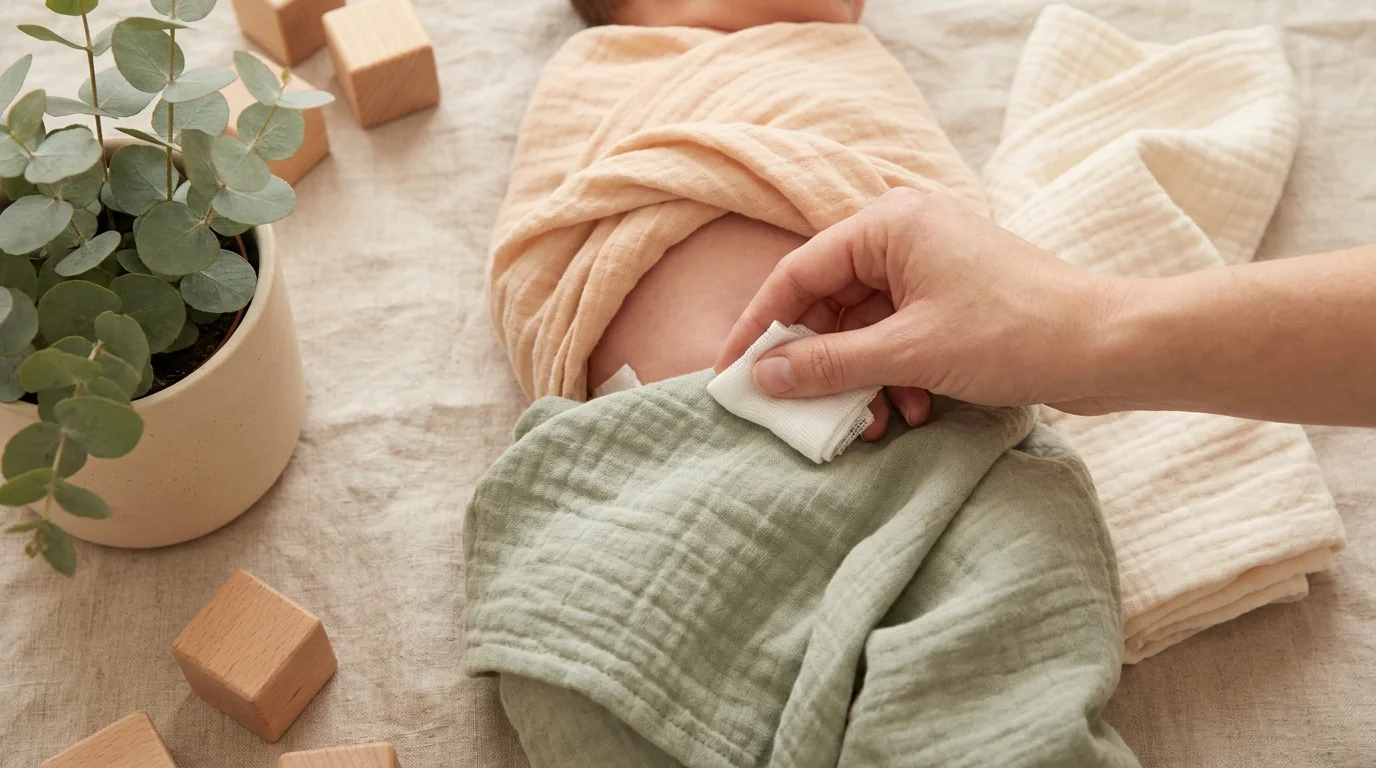
- Keep it dry: Pat the area gently dry after any accidental moisture. Air exposure speeds drying.
- Fold the diaper down: Most newborn diapers have a small notch for this purpose. If yours do not, simply fold the front edge down below the navel before fastening.
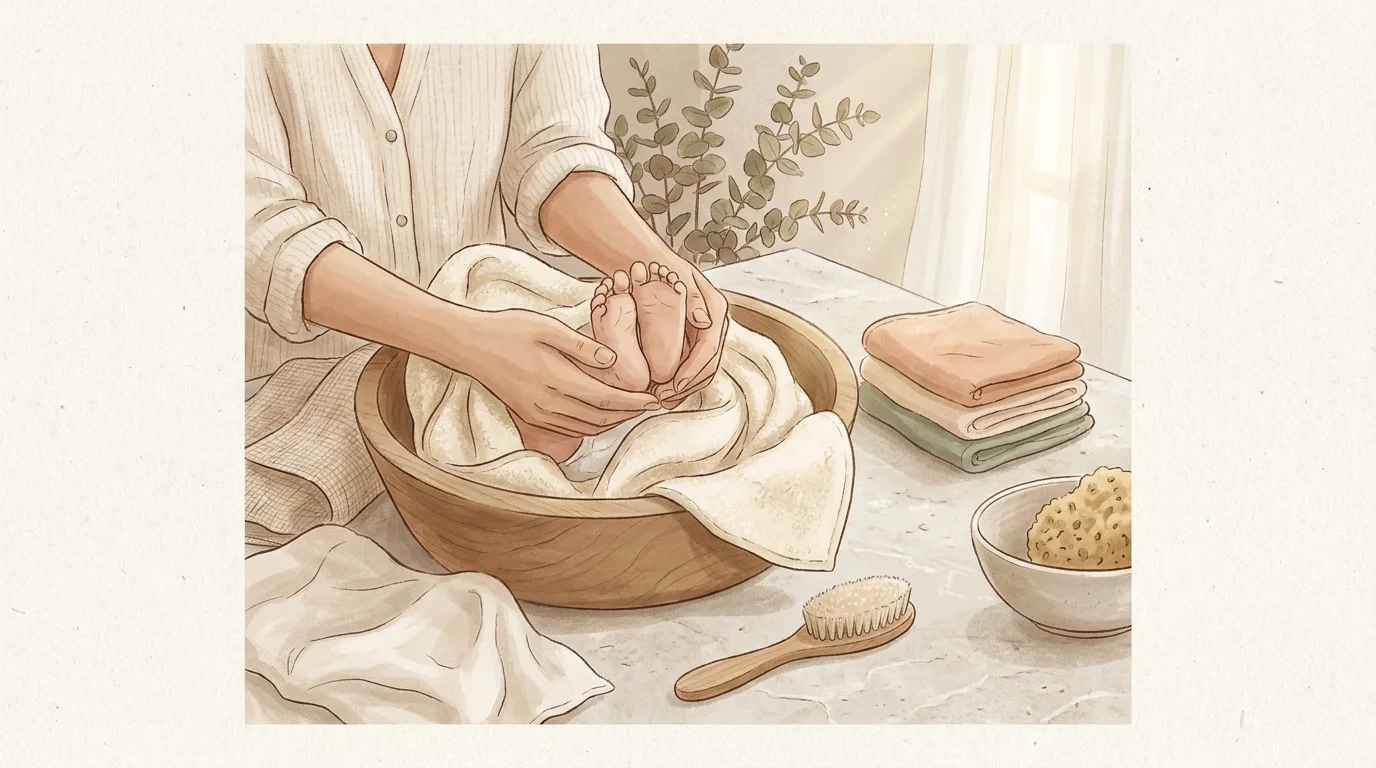
- Stick to sponge baths: Until the stump falls off and the skin heals, clean your baby with a soft cloth and warm water rather than submerging them in a bath.
- Avoid covering with clothing that traps moisture: Loose-fitting onesies or clothing that sits away from the stump allow air to circulate.
- Do not pull or twist it: Even when the stump seems ready to come off, let it separate on its own. Forcing removal can cause bleeding and increase infection risk.
- Skip the antiseptics unless directed: Unless your healthcare provider specifically recommends it, rubbing alcohol and antiseptic solutions are no longer part of routine cord care.
Key Takeaway
The best cord care is often the least intervention: keep it clean, keep it dry, leave it alone, and let nature do the work. Most stumps fall off within 7 to 21 days with no complications.
Signs of Infection: When to Call Your Doctor
Omphalitis, an infection of the umbilical stump and surrounding tissue, is rare but requires prompt treatment because newborns can become seriously ill quickly. Knowing the warning signs means you can act fast if something does not look right.
Contact your pediatrician promptly if you notice any of the following:
- Redness, warmth, or swelling spreading onto the skin around the navel
- Yellow or green pus draining from the stump or navel
- A strong, foul smell that is noticeably different from the mild dry odor of normal separation
- Your baby cries or winces when you gently touch the skin around the stump (the stump itself has no nerves, but inflamed surrounding skin does)
- Fever of 38°C (100.4°F) or higher in a newborn
- Bleeding that does not stop with gentle pressure within a few minutes
- The navel area looks wet and red more than a week after the stump has fallen off
"Parents should never feel embarrassed calling their pediatrician about the umbilical cord stump. In a newborn, early signs of infection can escalate quickly, and catching omphalitis early makes treatment straightforward. When in doubt, call."
Dr. Claire McCarthy, MD, Assistant Professor of Pediatrics, Harvard Medical School, Boston Children's Hospital
Umbilical Granuloma: A Common Post-Separation Finding
Sometimes, after the stump falls off, the navel does not heal with completely dry, flat skin. Instead, a small moist pink or red lump may form at the base of the navel. This is called an umbilical granuloma, and it is the most common complication following cord separation, occurring in roughly one in five newborns.
A granuloma forms when a small amount of scar-like tissue overgrows during healing. It may look slightly moist or have a glistening appearance and can occasionally cause minor discharge. It is not painful or dangerous, but it will not resolve entirely on its own without treatment in most cases.
The most common treatment is silver nitrate application by your doctor or midwife, which cauterizes the granuloma and encourages normal healing. Some providers use salt application as a first-line home treatment. Always follow your healthcare provider's guidance rather than attempting treatment without supervision.
Umbilical Hernia: Also Common and Usually Harmless
Another finding that concerns many parents is the umbilical hernia, a soft bulge at the navel that becomes more prominent when your baby cries or strains. This happens when a small gap in the abdominal muscles around the navel does not fully close after birth, allowing a tiny portion of intestine or fatty tissue to push through.
According to MedlinePlus, a resource from the U.S. National Library of Medicine, umbilical hernias are especially common in premature babies and in infants of African descent. The overwhelming majority close on their own by age one to two years without any intervention. Your pediatrician will monitor it at well-child visits and will recommend surgical repair only if it persists beyond age four or five, or if complications arise, which is rare.
Do not attempt the old folk remedy of taping a coin over the hernia. It does not help closure and can cause skin irritation.
Cord Care for Premature Babies
If your baby was born prematurely, cord care follows the same basic principles, but there are a few additional considerations. Preterm infants have thinner, more fragile skin and immune systems that are even less mature than those of term newborns, making infection prevention especially important. In neonatal intensive care unit (NICU) settings, staff will manage cord care directly. If your preterm baby comes home before the stump has fallen off, follow the guidance given by your NICU team, which may differ slightly from standard recommendations.
A Note on Cord Cutting Choices
Delayed cord clamping, the practice of waiting at least 30 to 60 seconds before cutting the cord, has become standard of care in many hospitals and is endorsed by the AAP and the American College of Obstetricians and Gynecologists (ACOG). Research shows it increases iron stores in newborns and supports healthy transition. Delayed clamping does not negatively affect cord stump healing or drying time.
Lotus birth, the practice of leaving the cord and placenta attached until they separate naturally over several days, is a different matter. The AAP has raised concerns about this practice, noting that the retained placenta can become a source of infection. If you are considering lotus birth, discuss the risks and lack of supporting evidence thoroughly with your healthcare provider before deciding.
Cord Care Checklist for the First Three Weeks
- Sponge baths only until the stump falls off and navel is healed
- Fold the diaper below the navel at every change
- Pat dry if any moisture gets on the stump
- No alcohol, antiseptics, or powders unless directed by your doctor
- Never pull or twist the stump
- Watch daily for redness, swelling, pus, or foul odor
- Call your pediatrician with any concern; when in doubt, reach out
What Happens After the Stump Falls Off
When the stump finally separates, you may find it in the diaper or somewhere in the crib. Some parents choose to keep it as a small memento of their baby's very first days. After separation, the navel area should dry and heal within seven to ten days. Continue keeping the area clean and dry during this period. Once healed, your baby's navel will look completely normal, and you can transition to full tub baths.
For most families, cord care ends up being far more straightforward than they anticipated. The key is gentle consistency rather than aggressive intervention. Trust the process, keep an eye out for the warning signs, and know that your instinct to check in with your doctor if something seems off is always the right call.
Key Statistics and Sources
- Most umbilical cord stumps separate within 7 to 21 days with dry care. National Library of Medicine, StatPearls
- Omphalitis occurs in approximately 0.5 to 0.7 per 1,000 live births in high-income countries. National Library of Medicine, StatPearls
- Dry cord care has been associated with faster separation times compared to alcohol-based care. WHO Guidelines on Newborn Health
- Umbilical hernias affect up to 20% of all newborns and up to 85% of very low birth weight infants. MedlinePlus, U.S. National Library of Medicine
- Delayed cord clamping increases newborn hemoglobin levels and iron stores, with benefits lasting up to 6 months. ACOG Committee Opinion
- Umbilical granulomas occur in approximately 1 in 500 newborns after cord separation. National Institutes of Health, PMC