Why Newborn Temperature Regulation Is So Different
Bringing a newborn home is filled with a hundred small decisions, and one of the most constant ones is this: is my baby too hot, too cold, or just right? It sounds simple, but newborn temperature regulation is genuinely more complex than it is for older babies or adults, and understanding why can take a lot of the guesswork out of those early weeks.
Newborns are born with an underdeveloped thermoregulatory system. Unlike adults who shiver to generate warmth or sweat to cool down efficiently, newborns rely heavily on a special type of tissue called brown adipose tissue (BAT), often called brown fat, to produce heat through a process called non-shivering thermogenesis. This brown fat is deposited during the third trimester, which is one reason premature babies are at much higher risk for temperature instability - they simply have less of it.
At the same time, newborns have a very high surface-area-to-body-mass ratio, meaning they lose heat quickly through their skin. Their heads are proportionally large and can lose significant heat if left uncovered in cool environments. Add to this the fact that their sweat glands are immature, and you have a baby who can overheat just as easily as they can get cold.
"Newborns cannot regulate their body temperature the way older children or adults can. They depend almost entirely on caregivers to maintain a thermally neutral environment, especially in the first four weeks of life."
- Dr. Rachel Moon, MD, FAAP, Professor of Pediatrics, University of Virginia School of Medicine
What Is a Normal Temperature for a Newborn?
A healthy newborn's normal core body temperature falls between 36.5°C and 37.5°C (97.7°F to 99.5°F). Temperatures are most accurately measured rectally for newborns, though axillary (underarm) readings are commonly used at home and are considered acceptable for screening.
According to the Centers for Disease Control and Prevention, temperature extremes can be dangerous for vulnerable populations, and newborns represent one of the most vulnerable groups. Hypothermia (low body temperature) is classified as a core temperature below 36.5°C, while a temperature above 38°C (100.4°F) in a newborn under three months old should always be treated as a medical emergency until proven otherwise.
Hypothermia vs. Hyperthermia: Know the Difference
Hypothermia in newborns can result from a cold delivery room, insufficient clothing, or prolonged skin exposure. Signs include:
- Skin that feels cool to the touch, especially hands, feet, and the back of the neck
- Pale, mottled, or bluish skin coloring
- Lethargy, poor feeding, or weak cry
- Slow breathing
Hyperthermia (overheating) is equally dangerous, and critically, has been linked to an increased risk of Sudden Infant Death Syndrome (SIDS). Signs your baby may be too warm include:
- Sweating, especially on the scalp or back of the neck
- Flushed or red skin
- Rapid breathing
- Restlessness or unusual fussiness
- Feeling hot to the touch on the chest or tummy
Key Takeaway
Always check your baby's temperature by feeling the nape of the neck or the chest, not the hands or feet. Hands and feet are naturally cooler in newborns due to immature circulation, and checking them can give a falsely alarming reading.
The Right Room Temperature for Your Newborn
Most pediatric guidelines recommend keeping your baby's sleep environment between 68°F and 72°F (20°C to 22.2°C). This range supports comfortable temperature regulation without creating conditions for overheating, which is a known SIDS risk factor.
Research from the National Institute of Child Health and Human Development (NICHD) specifically identifies overheating as one of the modifiable risk factors for SIDS, alongside unsafe sleep surfaces and exposure to smoke. Keeping the room at a comfortable temperature - one that feels comfortable to a lightly clothed adult - is a straightforward protective step.
You do not need to purchase a special nursery thermometer, though many parents find them reassuring. A basic indoor thermometer placed out of direct sunlight gives an accurate enough reading.
How to Dress Your Newborn for Sleep and Daily Life
The old rule of thumb - dress your baby in one more layer than you are wearing - is a reasonable starting point, but it needs some context. A "layer" for a newborn is much lighter than a layer for an adult. A cotton onesie, a light swaddle blanket, or a wearable sleep sack each count as a layer.
Safe Sleep Dressing
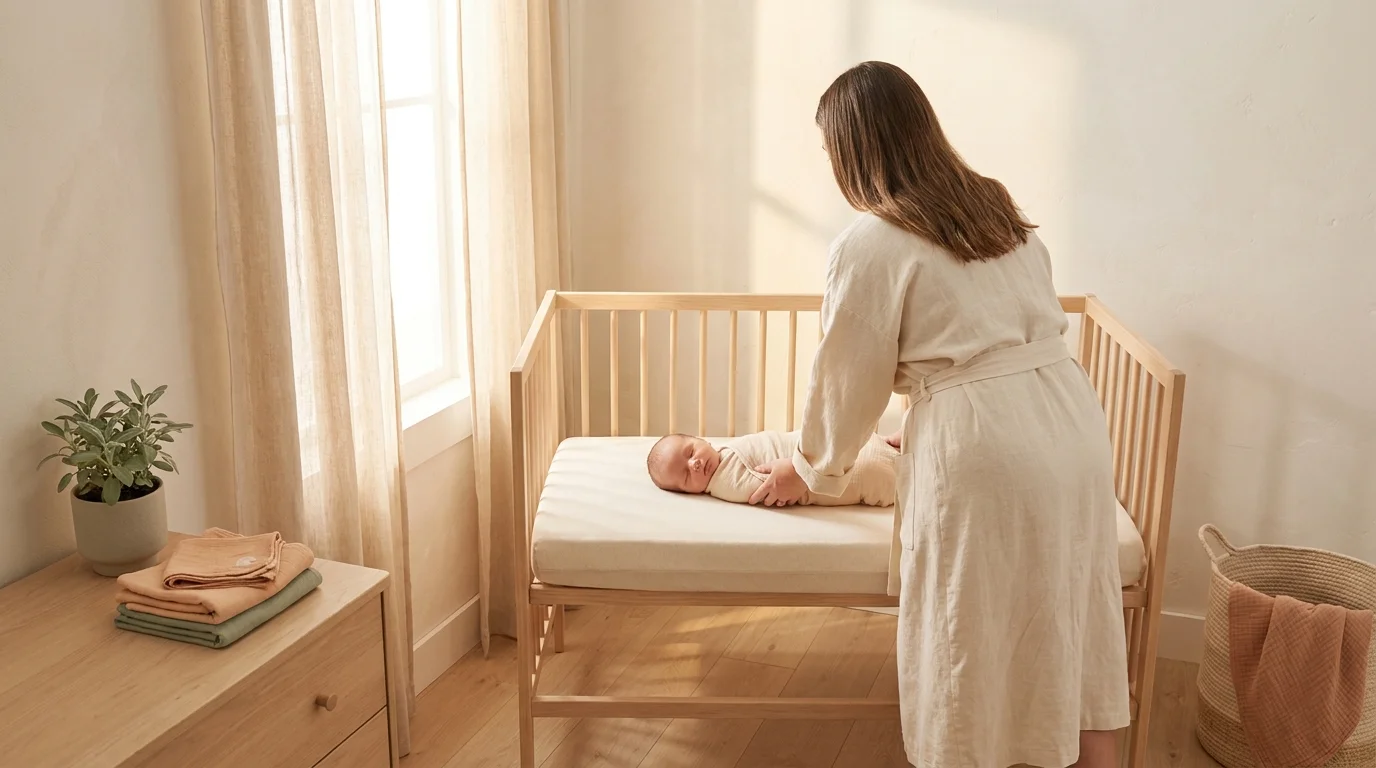
For sleep, the American Academy of Pediatrics (AAP) recommends keeping loose blankets out of the crib entirely. Instead, use a fitted sheet and dress your baby in a wearable blanket or sleep sack rated to the room temperature. Most sleep sacks are labeled with a TOG (Thermal Overall Grade) rating:
- 0.5 TOG: Suitable for warmer rooms (above 24°C / 75°F)
- 1.0 TOG: Suitable for rooms at 20-24°C (68-75°F)
- 2.5 TOG: Suitable for cooler rooms (16-20°C / 60-68°F)
Avoid hats during indoor sleep. While hats are important immediately after birth to prevent rapid heat loss, using them during sleep at home increases the risk of overheating.
Dressing for Daytime and Outings
For daily wakeful time at home, a simple cotton onesie and a light layer is usually sufficient in a temperature-controlled environment. For outings in cooler weather, layer your baby the same way you would yourself: a base layer close to the skin, a mid-layer for warmth, and a weather-appropriate outer layer. Always remove extra layers when coming indoors or entering a warm car.
"Parents are often more worried about their baby being cold than being too warm. In practice, we see far more cases of infants being overdressed than underdressed, and that carries real safety implications, particularly during sleep."
- Dr. Lori Feldman-Winter, MD, MPH, Professor of Pediatrics, Cooper Medical School of Rowan University
Swaddling and Temperature: Getting the Balance Right
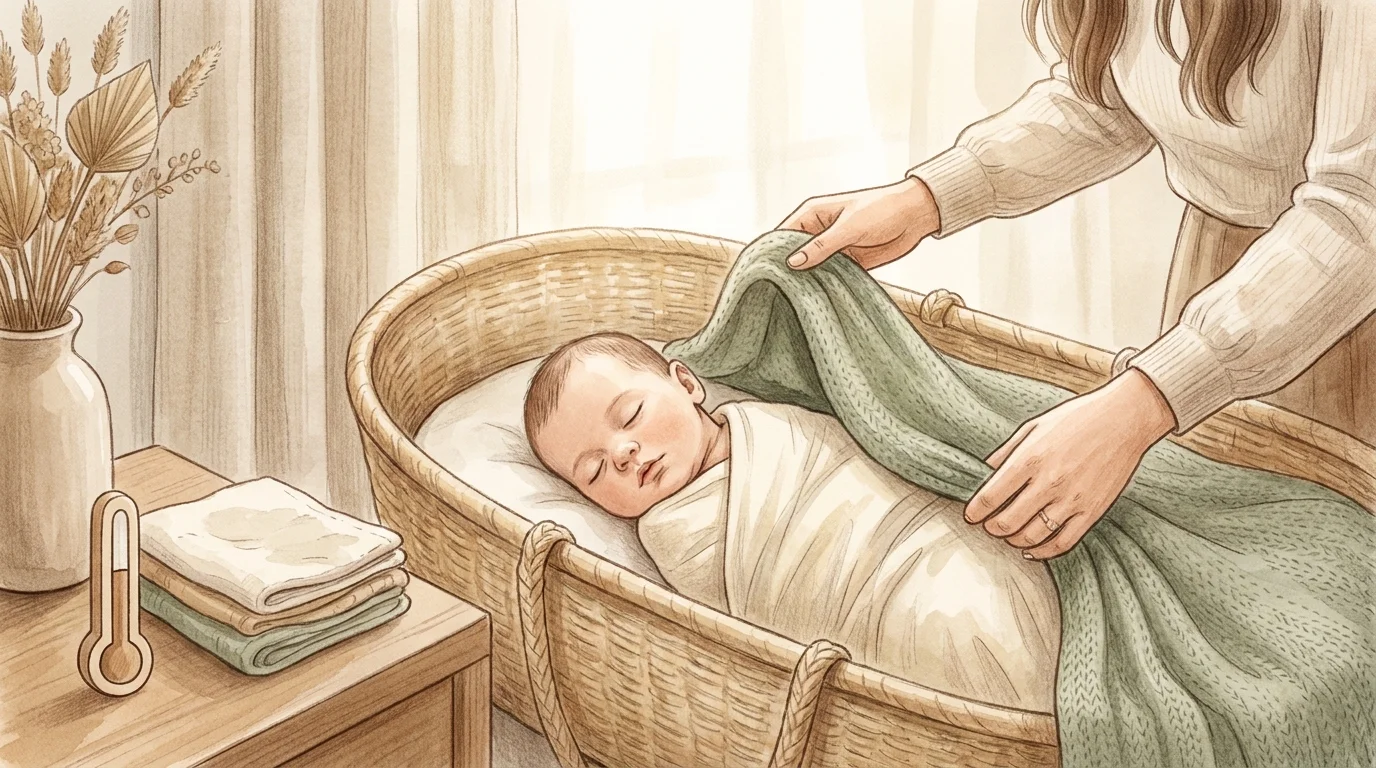
Swaddling is a time-honored technique for soothing newborns, and when done correctly, it is safe and effective. But swaddling adds warmth, so it must be factored into your overall layering decisions. A swaddled baby in a warm room wearing a heavy sleeper is at risk of overheating.
When swaddling, use a single lightweight muslin or cotton blanket. Ensure the swaddle is snug around the arms but leaves room for the hips and legs to move freely - this protects against hip dysplasia. Stop swaddling as soon as your baby shows any signs of rolling, typically between two and four months of age.
If you use a swaddle, dress your baby in a lighter base layer underneath. A short-sleeve onesie with a light muslin swaddle is often sufficient in a room kept at the recommended temperature range.
Skin-to-Skin Contact and Thermoregulation
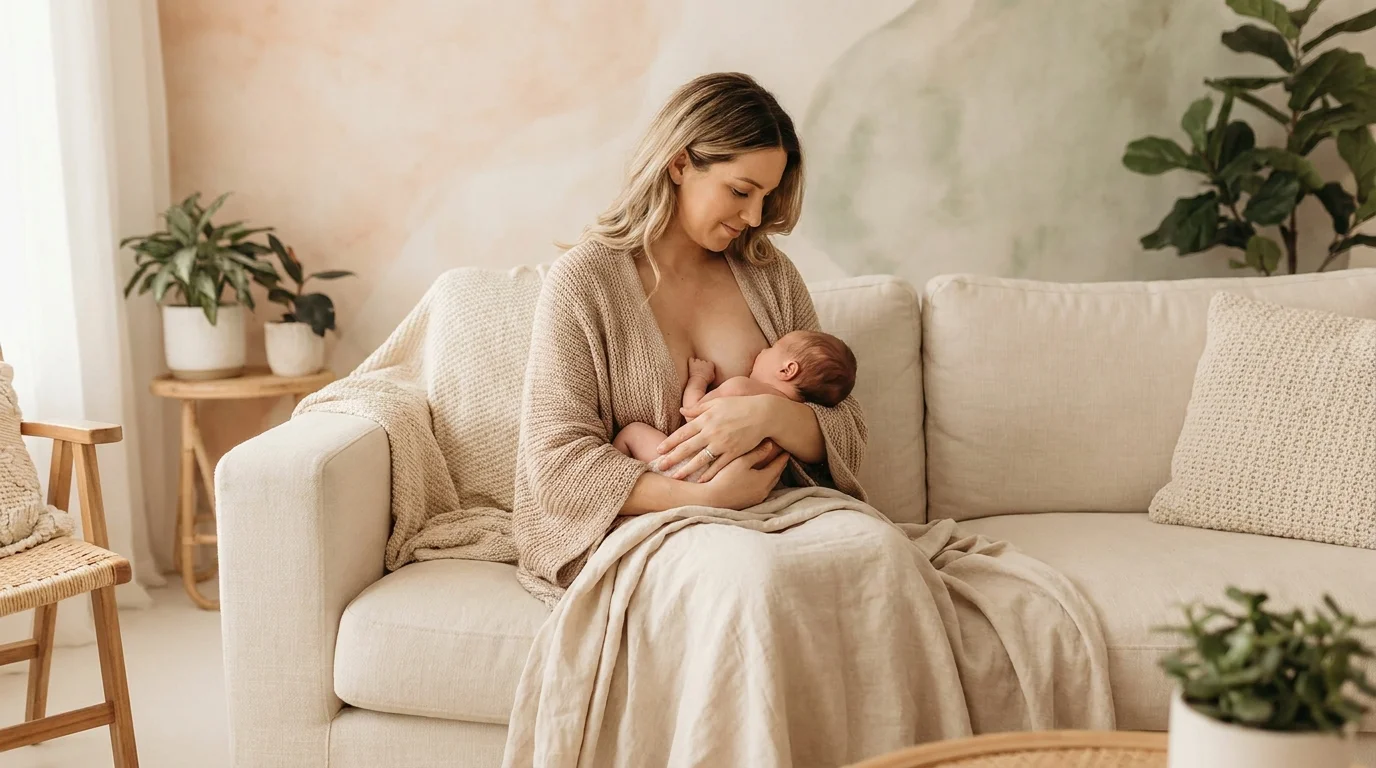
One of the most powerful tools for regulating a newborn's temperature - especially in the early hours and days of life - is your own body. Skin-to-skin contact, also called kangaroo care, activates a remarkable thermal synchrony between parent and baby. Your body actually adjusts its own surface temperature in response to your baby's needs, warming or cooling as required.
This is why skin-to-skin is standard practice immediately after birth, and why it is particularly critical for premature and low-birthweight infants whose brown fat stores are limited. Research consistently shows that kangaroo care reduces rates of hypothermia, stabilizes heart rate and breathing, and supports breastfeeding initiation.
During skin-to-skin time at home, you may notice your baby's color improves and they settle more quickly. This is thermoregulation working beautifully between you.
Key Takeaway
Your body is your newborn's most effective thermoregulator. Skin-to-skin contact for 30 minutes or more per day supports stable temperature, bonding, and breastfeeding - especially in the early weeks.
When to Take Your Baby's Temperature
You do not need to take your baby's temperature routinely unless you have a concern. Learn to read your baby's cues through touch and observation first. However, there are clear situations when a thermometer reading is essential:
- Your baby feels unusually hot or cold to the touch
- They are unusually lethargic, feeding poorly, or difficult to rouse
- They have a weak, high-pitched, or unusual cry
- Their skin is mottled, pale, or has a bluish tinge
- You simply feel something is off - trust that instinct
For infants under three months, any rectal temperature of 38°C (100.4°F) or higher is a medical emergency requiring immediate evaluation. Do not wait, do not give infant acetaminophen, and do not assume it is a mild illness. Young newborns can deteriorate rapidly with infection, and fever is often the only early sign.
Special Considerations: Premature and Low-Birthweight Babies
If your baby was born early or at a lower birthweight, temperature regulation deserves extra attention. These babies have less brown fat, thinner skin, and reduced muscle mass - all of which contribute to greater heat loss. Many premature babies go home with specific temperature guidelines from their neonatal care team.
If your baby spent time in the NICU, ask your care team for personalized guidance on room temperature, clothing, and monitoring before discharge. When in doubt, a slightly warmer room temperature and slightly more layering is appropriate for very small babies, but always within the ranges your medical team recommends.
Practical Tips for Confident Temperature Care
- Keep a reliable indoor thermometer in the nursery
- Check your baby's neck or chest, not their hands or feet, to assess warmth
- Avoid covering your baby's head during indoor sleep
- Remove hats and extra layers as soon as you come indoors from the cold
- Never place your baby near a heating vent, radiator, or in direct sunlight
- Do not use electric blankets, heated mattress pads, or hot water bottles near your baby
- In hot weather, use a fan to improve air circulation in the room rather than placing it directly on the baby
- Dress your baby in natural, breathable fabrics like cotton or bamboo rather than synthetic materials
Trusting Your Instincts While Staying Informed
Temperature management in the newborn period can feel overwhelming at first, but most parents quickly develop a reliable sense of their baby's comfort through careful observation. The principles are not complicated: keep the room at a comfortable temperature, avoid overdressing during sleep, use skin-to-skin contact generously, and act promptly if something seems wrong.
Your hands, your attention, and your knowledge are the most powerful tools you have. Combine them with the evidence-based guidance in this article, and you are well equipped to keep your baby safe and comfortable through every season.
Key Statistics and Sources
- Overheating is a recognized modifiable risk factor for SIDS, according to the NICHD Safe Sleep Campaign.
- The AAP recommends a sleep environment of 68-72°F (20-22°C) to reduce overheating risk - AAP Safe Sleep Guidelines.
- Brown adipose tissue constitutes approximately 2-6% of a full-term newborn's body weight and is their primary heat source, per NCBI StatPearls: Neonatal Thermoregulation.
- Any fever of 38°C (100.4°F) or higher in an infant under 3 months requires immediate medical evaluation, per AAP HealthyChildren.org.
- Kangaroo care (skin-to-skin) significantly reduces hypothermia in newborns, particularly preterm infants, per NCBI: Kangaroo Mother Care and Neonatal Outcomes.
- Premature infants born before 32 weeks have significantly less brown fat and are at substantially higher risk for thermoregulatory instability, per CDC Preterm Birth Data.