Why Safe Sleep Is One of the Most Important Things You Can Do Right Now
When your newborn finally drifts off, the relief is enormous. But for many new parents, that quiet moment quickly gives way to a fresh wave of worry: are they sleeping safely? You check the monitor. You tiptoe in to watch their chest rise. You Google things at 2 a.m. that you immediately regret.
This article is here to replace that anxious Googling with something more useful: clear, research-backed guidance on how to set up a sleep environment that genuinely protects your baby. Safe sleep is not complicated, but it does require consistency, and it matters more in those first months than almost anything else you will do as a new parent.
Understanding the Risk: What Is SIDS?
Sudden Infant Death Syndrome, known as SIDS, is the unexpected death of an otherwise healthy baby under 12 months of age, with no identifiable cause even after a full investigation. It remains one of the leading causes of infant death in the first year of life, and it peaks between one and four months of age.
SIDS is not fully understood, but researchers believe it involves a combination of factors: a vulnerable infant during a critical developmental window, combined with an external stressor in the sleep environment. That stressor is often something preventable, which is exactly why safe sleep guidelines exist and why they work.
"The vast majority of SIDS deaths occur during sleep, and most are associated with modifiable environmental risk factors. Parent education about safe sleep is one of the highest-impact interventions we have in early infancy."
Dr. Rachel Moon, MD, FAAP, Professor of Pediatrics, University of Virginia School of Medicine
The good news is that SIDS rates have dropped significantly since safe sleep campaigns began in the early 1990s. According to the National Institute of Child Health and Human Development (NICHD), SIDS deaths in the United States declined by more than 50 percent following the launch of the Back to Sleep campaign, which encouraged placing babies on their backs to sleep. The science is clear and the guidelines are actionable.
The ABCs of Safe Sleep
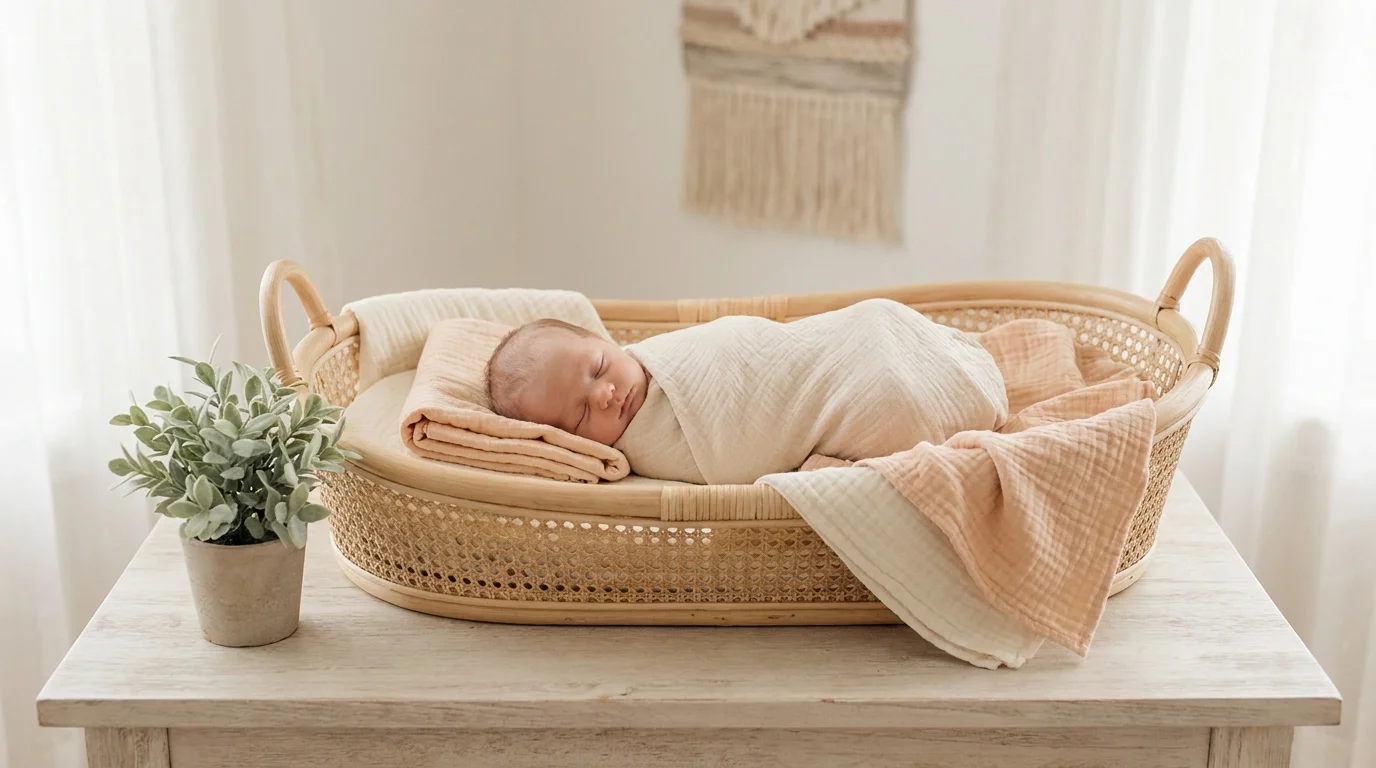
The American Academy of Pediatrics summarizes the core principles of safe sleep with three letters: A, B, C. Alone, Back, Crib. These three principles form the foundation of every recommendation that follows.
- Alone: Your baby should sleep by themselves, without other people or objects sharing their sleep surface.
- Back: Always place your baby on their back for every sleep, every time, until their first birthday.
- Crib: Your baby should sleep on a firm, flat surface in a safety-approved crib, bassinet, or play yard.
Always on Their Back: Why Position Matters
Placing your baby on their back to sleep is the single most important thing you can do to reduce the risk of SIDS. Back sleeping keeps the airway open, reduces the risk of overheating, and prevents a baby from rebreathing exhaled carbon dioxide that can accumulate in soft bedding.
Many parents worry about their baby choking if they are on their backs, but healthy newborns have a strong protective reflex that prevents this. Babies are actually at greater risk of breathing difficulties when placed on their stomachs. The American Academy of Pediatrics (AAP) is unambiguous: back sleeping for every sleep, including naps, until your baby reaches 12 months.
Once your baby can roll from back to front and front to back independently, you do not need to reposition them during the night. But always start them on their back.
The Sleep Surface: Firm, Flat, and Clear
Your baby's mattress should be firm and flat. This is not about comfort in the adult sense. A firm surface prevents a baby's face from sinking in, which could obstruct their airway. A flat surface (not inclined more than 10 degrees) keeps their head in a position that maintains an open airway.
The sleep space itself should be completely free of the following:
- Pillows and positioners
- Loose blankets, quilts, or comforters
- Bumper pads (including mesh ones)
- Stuffed animals and soft toys
- Sleep wedges or incline inserts
If you are worried about your baby being cold, use a wearable blanket or sleep sack rated for the appropriate temperature. These keep babies warm without creating loose fabric that could cover their face.
"Parents often feel they are being kind by adding softness to a baby's crib, but a bare sleep surface is genuinely the safest option. Warmth should come from clothing and sleep sacks, not from items that can shift during sleep."
Dr. Lori Feldman-Winter, MD, MPH, Division of Adolescent Medicine, Cooper Medical School of Rowan University
Room-Sharing Without Bed-Sharing
The AAP recommends that parents share a room with their newborn for at least the first six months, and ideally the first year. Room-sharing is associated with a significantly reduced risk of SIDS, likely because parents are more aware of the baby's sounds and movements, and because it supports breastfeeding.
However, room-sharing is not the same as bed-sharing, and this distinction matters. Sharing an adult bed with a newborn significantly increases the risk of accidental suffocation, entrapment, and overlay, especially when combined with soft bedding, parental fatigue, or the use of alcohol or sedating medications.
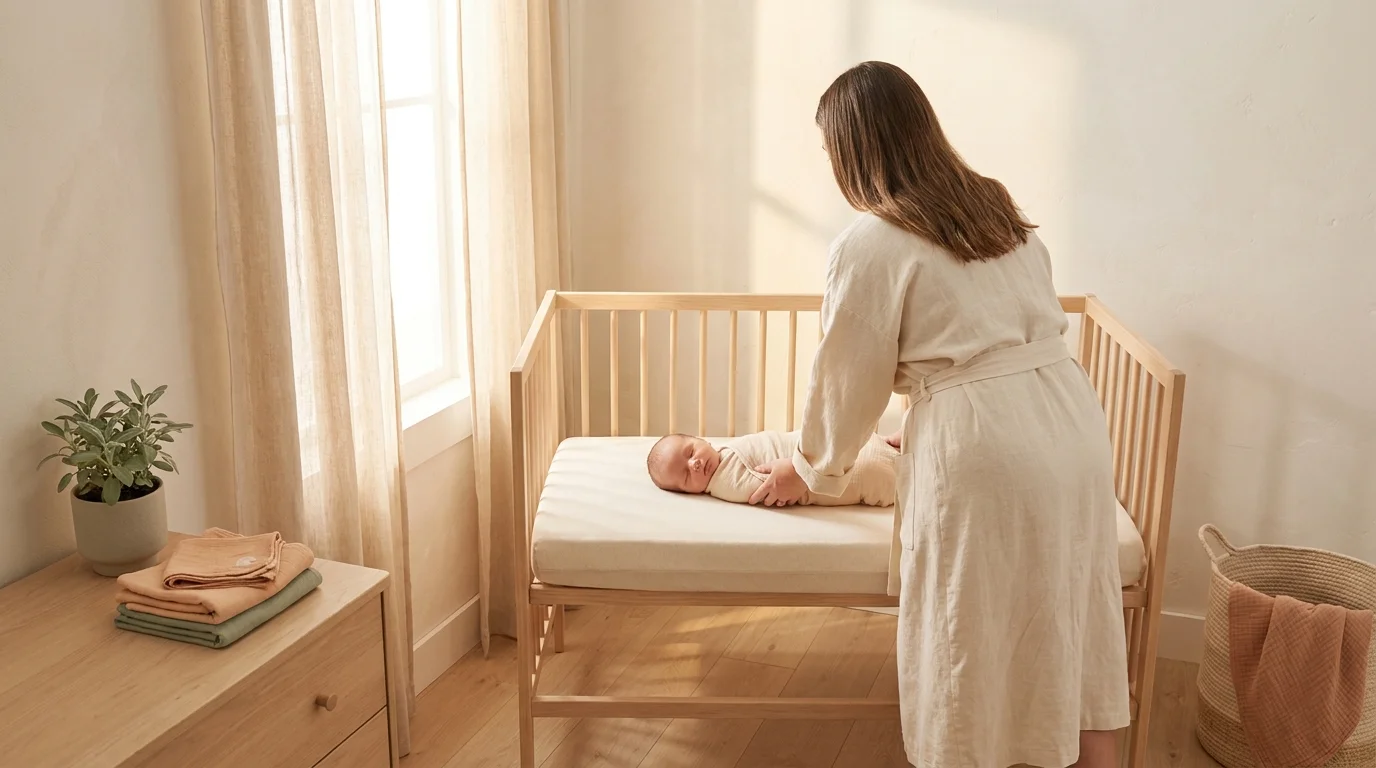
The safest option is a bedside bassinet or a crib placed close to your bed. This keeps your baby within arm's reach for night feeds while maintaining a separate, safe sleep surface.
If you do fall asleep while feeding your baby in bed (which happens to nearly every parent), place your baby on their back in their own sleep space as soon as you wake up. Planning ahead for this scenario, by having the bassinet right next to you, makes it much easier to follow through in those exhausted early weeks.
Temperature: Keeping It Just Right
Overheating is a known risk factor for SIDS. A baby who is too warm may sleep more deeply than is safe for this stage of development. The goal is a room temperature that feels comfortable for a lightly clothed adult: typically between 68 and 72 degrees Fahrenheit (20 to 22 degrees Celsius).
Signs that your baby may be too warm include sweating, damp hair, flushed cheeks, heat rash, or rapid breathing. Their tummy or the back of their neck is a more reliable guide to temperature than their hands and feet, which are naturally cooler.
A simple guideline: dress your baby in one more layer than you would wear in the same room, then skip the blanket and use a sleep sack instead.
Pacifiers and Safe Sleep
Research consistently shows that offering a pacifier at the start of sleep is associated with a reduced risk of SIDS. The mechanism is not fully understood, but it is thought that sucking may help maintain arousal during sleep and keep the airway more open.
A few practical points worth knowing:
- If you are breastfeeding, the AAP suggests waiting until breastfeeding is well established (usually around three to four weeks) before introducing a pacifier, though recent evidence suggests earlier introduction may not cause problems.
- Never attach a pacifier to a string or clip around the baby's neck or to their clothing.
- If the pacifier falls out after your baby is asleep, you do not need to replace it.
Smoke, Alcohol, and Medications: Clear Lines
Prenatal and postnatal exposure to tobacco smoke is one of the strongest modifiable risk factors for SIDS. This includes second-hand smoke in the home. Keeping your baby's environment smoke-free is not just general health advice. It is a direct SIDS prevention strategy, as detailed in research published through the Centers for Disease Control and Prevention (CDC).
Parental consumption of alcohol, cannabis, or sedating medications in the hours before bed significantly increases the risk associated with accidental overlay, even in a shared room. If you are bed-sharing at any point, these substances should be completely avoided.
Swaddling: When It Helps and When to Stop
Swaddling can help newborns settle by limiting the startle reflex that often wakes them. When done correctly, it is safe. When done incorrectly, it can increase risk. Here is what to keep in mind:
- Always place a swaddled baby on their back.
- Make sure the swaddle is not too tight across the hips (this can affect hip development) and is not so tight across the chest that breathing is restricted.
- Stop swaddling as soon as your baby shows signs of rolling, usually around two to four months. A swaddled baby who rolls to their front cannot push themselves back and is at much greater risk of suffocation.
Once swaddling is no longer safe, transition to a sleep sack or wearable blanket, which gives the same gentle containment without restraining the arms.
Tummy Time Is Not Sleep Time
Many parents hear about safe sleep and wonder whether tummy time is safe at all. It absolutely is, and it is important for your baby's development. But tummy time is supervised, awake time only. The moment your baby falls asleep during tummy time, gently roll them onto their back.
Tummy time helps strengthen the neck, shoulder, and core muscles that babies will need for rolling, sitting, and crawling. Aim for short, frequent sessions throughout the day: two to three minutes at a time is perfectly sufficient in the early weeks, gradually increasing as your baby grows stronger.
Strollers, Car Seats, and Bouncers
Car seats, swings, bouncers, and strollers are not designed for unsupervised sleep. Their inclined surfaces can cause a baby's head to fall forward, compressing the airway in a position called positional asphyxia. If your baby falls asleep in any of these devices during transit, transfer them to a firm, flat sleep surface as soon as it is safe to do so.
- SIDS rates in the US dropped by more than 50% after the Back to Sleep campaign launched in 1994. NICHD
- SIDS is the leading cause of death in infants aged one month to one year in the United States. CDC
- Room-sharing without bed-sharing can reduce the risk of SIDS by up to 50%. AAP
- Approximately 3,400 sleep-related infant deaths occur annually in the United States. CDC
- Exposure to cigarette smoke doubles the risk of SIDS. NICHD
- Pacifier use at sleep onset is associated with a 50-90% reduced risk of SIDS in some studies. AAP
A Final Word for Exhausted Parents
Safe sleep guidelines can feel like a long list of things to worry about, and that is not the intention. Most of it comes down to one consistent habit: back, alone, on a firm flat surface, in a smoke-free room at a comfortable temperature. Everything else builds around that foundation.
You will have nights when you are so tired that nothing feels manageable. Having the bassinet right beside your bed, the sleep sacks already out, and the thermostat set the night before makes it easier to follow through when exhaustion is at its peak. Set yourself up for success before the hard nights arrive, and give yourself credit for every safe sleep moment you create for your baby.