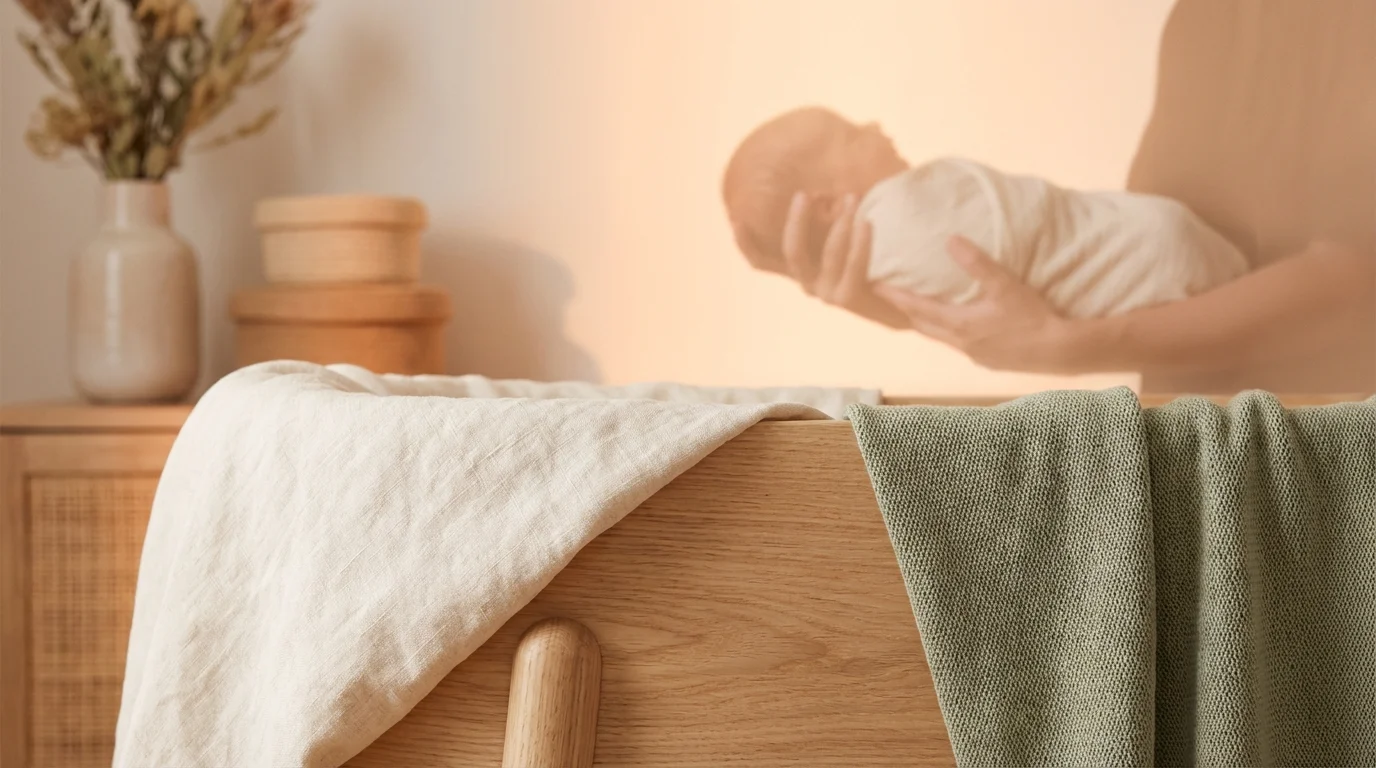
The moment your baby arrives, they are not a blank slate. They arrive already shaped by nine months of sound, movement, taste, and touch inside the womb, equipped with a sensory system that is far more sophisticated than many parents expect. Understanding what your newborn can perceive in those early weeks is one of the most powerful tools you have for bonding, responding confidently, and supporting their brain development from day one.
Why Sensory Development Matters From Birth
Every time your newborn sees your face, hears your voice, or feels the warmth of your skin, millions of neural connections are forming in their brain. The early weeks and months of life represent a period of extraordinary neurological growth, and sensory experiences are the raw material that drives it. Research from the National Institute of Child Health and Human Development confirms that rich, responsive sensory environments in infancy are strongly associated with cognitive and emotional development later in childhood.
This does not mean you need to buy expensive toys or overstimulate your baby. It means the everyday things you already do, talking, holding, feeding, singing, are precisely the right medicine.
"Newborns are not passive recipients of the world. They are active sensory learners from the very first breath, and parents are their most important teachers."
Dr. Andrew Meltzoff, PhD, Co-Director, Institute for Learning and Brain Sciences, University of Washington
Vision: A Blurry But Purposeful World
Your newborn's vision is the least developed of all their senses at birth, but it is far from absent. Newborns can see most clearly at a distance of about 20 to 30 centimetres, which happens to be roughly the distance between a feeding baby's face and their parent's face. This is no coincidence.
What Your Newborn Can See
- High contrast patterns: Black and white or strongly contrasted colours catch a newborn's attention because their retinas are still maturing and respond best to strong visual signals.
- Human faces: From birth, babies show a strong preference for face-like patterns. Studies show they will track a face-shaped image longer than other stimuli of the same size.
- Light and movement: Your baby can track slow-moving objects with their eyes within the first few days, a skill that develops rapidly over the first month.
Colour vision develops gradually. By around two to three months, babies begin to distinguish a broader range of colours, with red, green, and yellow emerging before blue. In the very first weeks, focusing both eyes together (binocular vision) can look uncoordinated, and occasional crossing of the eyes is completely normal. If it persists beyond three months, mention it to your paediatrician.
Practical Tip
During feeds and awake time, position your face 25 to 30 centimetres from your baby's and make slow, exaggerated facial expressions. Sticking out your tongue, raising your eyebrows, and opening your mouth wide are among the first gestures newborns will attempt to imitate, sometimes within hours of birth.
Hearing: The Sense That Starts in the Womb
Of all five senses, hearing has the longest head start. The auditory system begins functioning around 18 weeks of pregnancy, and by the third trimester, your baby has been listening to your heartbeat, your voice, and muffled sounds from the outside world for months. This means your voice is already familiar, comforting, and meaningful before birth.
What Your Newborn Can Hear
Newborns can hear the full range of human speech from birth and show a clear preference for higher-pitched, melodic voices, which is precisely why parents instinctively shift to a sing-song tone (sometimes called "motherese" or infant-directed speech) when talking to their babies. Research from the National Institutes of Health has shown that infant-directed speech is not just soothing but actively supports language acquisition by highlighting the rhythms and sounds of language in a way that standard adult speech does not.
Your newborn will also startle at sudden loud noises (the Moro reflex), turn their head toward familiar sounds, and calm more readily to voices they have already heard in the womb. Playing soft music, reading aloud, and narrating your daily activities all provide valuable auditory stimulation without overwhelming a young nervous system.
"We now know that the foundations of language are laid in the first months of life, not when a child says their first word. Every conversation you have near your newborn is building their future vocabulary."
Dr. Patricia Kuhl, PhD, Professor of Speech and Hearing Sciences, University of Washington
Smell and Taste: Deeply Wired Instincts
Smell and taste are arguably the most powerful of the newborn's senses in terms of survival and bonding. Both are remarkably well developed at birth.
The Power of Smell
Within hours of birth, a newborn can identify their mother's breast milk by scent alone. In studies, when given the choice between breast pads from their own mother and from a stranger, newborns consistently turn toward their mother's scent. This olfactory recognition plays a meaningful role in feeding instincts and attachment.
Skin-to-skin contact amplifies this connection significantly. The familiar scent of a parent's chest calms cortisol levels in newborns and promotes stable heart rate and temperature, one of the many physiological reasons skin-to-skin care is so strongly recommended in the early postpartum period.
Taste From Day One
Newborns are born with a strong preference for sweet tastes (breast milk is naturally sweet) and show clear aversion to bitter or sour flavours. The taste system is functional from as early as 14 weeks gestation, when the baby begins swallowing amniotic fluid flavoured by the mother's diet. This early taste exposure may help explain why babies often accept foods their mothers ate regularly during pregnancy more easily when solids are introduced later.
Touch: Your Baby's First Language
Touch is the first sense to develop in utero, beginning around 8 weeks of pregnancy. By the time your baby is born, their skin is covered with sensory receptors that respond to temperature, pressure, pain, and texture. Touch is not just comforting for newborns; it is essential for their growth and development.
The Science of Skin-to-Skin
The benefits of skin-to-skin contact, sometimes called kangaroo care, are among the most well-researched findings in neonatal medicine. According to data from the Centers for Disease Control and Prevention, skin-to-skin contact after birth supports breastfeeding initiation, stabilises newborn temperature and blood sugar, reduces crying and stress responses, and strengthens the parent-infant bond.
Even gentle touch during everyday caregiving moments, bathing, nappy changes, massage, and carrying, contributes to a newborn's sense of safety and their developing nervous system. Infant massage, in particular, has been shown to support weight gain in preterm babies and reduce colic symptoms.
Key Takeaway
You cannot "spoil" a newborn with too much holding. Responding to your baby's need for touch is not creating bad habits; it is building the neurological foundation for emotional regulation and secure attachment.
Proprioception and Vestibular Sense: Movement and Balance
Beyond the classic five senses, newborns also have a highly active vestibular system, the sense responsible for balance and spatial orientation. After spending nine months in near-constant motion inside the womb, newborns find rocking, swaying, and rhythmic movement deeply soothing. This is why so many settling techniques involve gentle motion, prams, rocking chairs, bouncing, and babywearing all tap into a sensory system that has been active since before birth.
Tummy time, when your baby is placed on their stomach while awake and supervised, begins to develop proprioceptive awareness and builds the core strength needed for future milestones like rolling, sitting, and crawling. Starting tummy time from the first week, even for just a few minutes at a time, makes a significant difference over the coming months.
Sensory Overload: Reading Your Baby's Cues
As capable as your newborn's senses are, their capacity to process and regulate incoming stimulation is still immature. Newborns have a narrow window of calm alertness in which they are most able to engage with the world. Outside that window, they can quickly become overstimulated, which shows up as fussiness, turning away, hiccuping, yawning, or falling asleep abruptly.
Signs Your Baby Needs a Break
- Turning their head or gaze away from you
- Arching their back or stiffening their body
- Fussing or crying after a period of engagement
- Yawning, sneezing, or hiccuping during interaction
- Falling asleep suddenly during play
These are not signs of rejection; they are your baby's earliest attempts at communication. Responding to these cues by dimming lights, reducing noise, and offering quiet closeness teaches your baby that their signals are heard and respected, one of the earliest lessons in emotional regulation.
Supporting Sensory Development: Simple, Everyday Ideas
You do not need a specially curated sensory programme to support your newborn's development. The following everyday practices provide rich, appropriate stimulation across all sensory systems:
- Talk and sing continuously: Narrate nappy changes, feeds, and walks. Your voice is the most powerful developmental tool you own.
- Hold and carry your baby: Babywearing provides simultaneous vestibular, tactile, and olfactory input in a gentle, regulated way.
- Offer varied textures during cuddles: Soft blankets, skin-to-skin contact, and gentle stroking all stimulate tactile development.
- Make eye contact during feeds: These quiet, focused moments of mutual gaze are some of the most neurologically powerful interactions you can have.
- Go outside: Natural light supports circadian rhythm development, and the gentle sounds and smells of the outdoors provide rich, low-intensity sensory variety.
- Black-and-white images: Simple high-contrast images near the nappy station or feeding chair give early visual stimulation without overwhelm.
Key Statistics and Sources
- Newborns can distinguish their mother's voice from a stranger's voice within hours of birth. NIH
- Skin-to-skin care in the first hour after birth is associated with a 24% increase in breastfeeding success at one month. CDC
- Newborns prefer looking at face-like patterns over equally complex non-face stimuli, a preference documented within the first 30 minutes of life. NICHD
- Infant-directed speech (motherese) has been shown to accelerate phonetic learning compared to adult-directed speech in babies under six months. NIH
- Touch is the first sense to develop, appearing as early as 8 weeks gestation, making it the longest-established sensory system at birth. NICHD
- Tummy time from the first week of life is associated with significantly earlier achievement of motor milestones including rolling and sitting. CDC