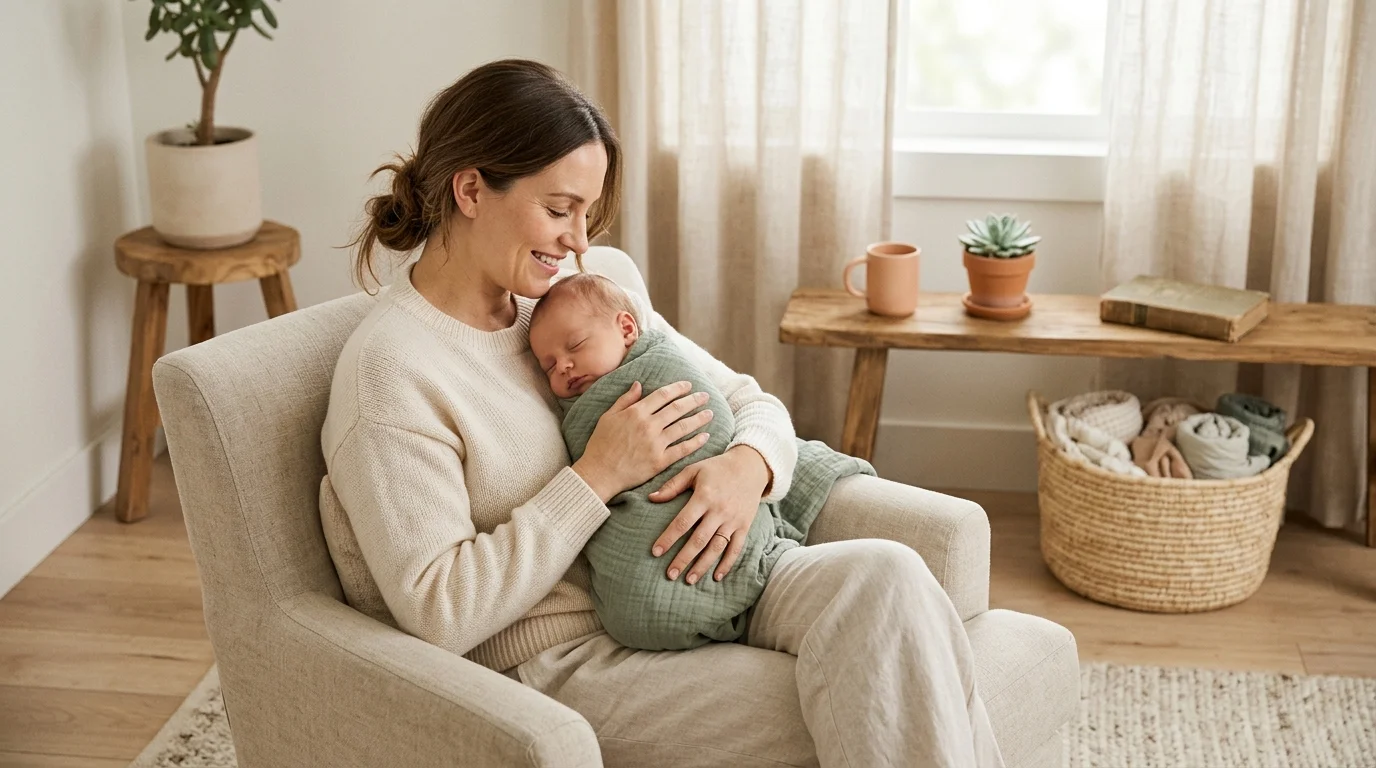
The first year of your baby's life is one of the most extraordinary journeys you will ever witness. In just twelve months, a tiny newborn who cannot hold their own head transforms into a curious, communicative little person who may already be pulling themselves up to stand. It is breathtaking, sometimes overwhelming, and always worth paying attention to.
Understanding developmental milestones can help you celebrate your baby's progress with confidence rather than anxiety. It can also help you spot early if something needs a closer look from your healthcare provider. This guide walks you through what to expect month by month, rooted in the latest research and expert insight, while reminding you that every baby develops at their own wonderful pace.
What Are Developmental Milestones?
Developmental milestones are skills or behaviours that most babies display by a certain age. They fall into four broad categories: motor skills (both gross and fine), language and communication, cognitive development, and social and emotional growth. Paediatricians use these markers as reference points during well-child visits, not as rigid checkboxes that every baby must tick on a precise schedule.
"Milestones are best understood as a range, not a deadline. What matters most is the direction of travel: is your baby continuously gaining new skills and engaging with the world around them?"
- Dr. Jennifer Cross, MD, Developmental Paediatrician, Weill Cornell Medicine
The Centers for Disease Control and Prevention (CDC) updated its milestone checklists in 2022 to reflect what most babies can do by a given age, making them a more practical tool for parents and clinicians alike.
Months 1 and 2: Hello, World
Motor Skills
Your newborn arrives with a set of reflexes that are remarkable in their own right. The rooting reflex, the grasp reflex, and the startle (Moro) reflex are all signs of a healthy nervous system at work. By the end of month two, tummy time sessions should be going a little longer, and you may notice your baby beginning to lift their head briefly when placed on their stomach.
Social and Emotional
One of the most joyful moments in early parenthood arrives somewhere between six and eight weeks: the first real, intentional social smile. Unlike the fleeting expressions of the newborn weeks, this smile is directed at you, and it marks the beginning of genuine social connection. Your baby is also beginning to recognise your voice and face, calming more readily when you appear.
Language and Cognition
Cooing sounds begin to emerge around six to eight weeks. Your baby is already listening intently to the rhythm and tone of your speech, laying the groundwork for language development. Talk to your baby often, even when it feels one-sided. Research from the American Academy of Pediatrics consistently shows that early language exposure is one of the strongest predictors of later vocabulary and literacy.
Key Takeaway: Months 1-2
- Encourage tummy time from day one, building up slowly to prevent flat head syndrome.
- Respond to your baby's coos and cries consistently - this builds secure attachment.
- Skin-to-skin contact continues to support brain development and emotional regulation.
Months 3 and 4: Discovering the Body
Motor Skills
Head control is becoming much more reliable. When held upright, your baby can steady their head without much bobbing. On their tummy, they may push up onto their forearms. Hands are suddenly fascinating objects: your baby will spend long stretches staring at their own fingers, bringing them together, and attempting to bat at toys hanging above them.
Social and Emotional
Laughter arrives, often as a delightful surprise to both of you. Your baby is becoming more expressive, making different sounds to signal hunger, discomfort, or delight. They are beginning to show a clear preference for familiar caregivers over strangers.
Language and Cognition
Babbling begins in earnest. You will hear strings of vowel sounds - "ooh," "aah," "eee" - and your baby will pause as if waiting for you to respond. This conversational turn-taking, even at this early stage, is the foundation of all future communication. Mirror their sounds back to them and add simple words to keep the dialogue going.
Months 5 and 6: Reaching Out
Motor Skills
Rolling over often makes its debut between four and six months. Many babies master rolling from tummy to back first, then back to tummy. This is also the stage when babies begin reaching out deliberately to grab objects and bringing them straight to their mouths. Ensure your environment is safe and age-appropriate for exploration.
Feeding and Development
Around six months, most babies show readiness signs for solid foods: they can sit with minimal support, show interest in what you are eating, and have lost the tongue-thrust reflex that pushes food out of the mouth. The National Institutes of Health recommends continuing breast milk or formula as the primary nutrition source while introducing purees and soft foods alongside it.
"The introduction of solid foods is a developmental event as much as a nutritional one. How you approach mealtimes - with patience, variety, and no pressure - shapes your child's relationship with food for years to come."
- Dr. Natasha Burgert, MD, FAAP, Paediatrician and Child Health Advocate, Kansas City
Key Takeaway: Months 5-6
- Always supervise rolling babies on elevated surfaces - they can move faster than you expect.
- Introduce solid foods only when your baby shows all three readiness signs, not by calendar date alone.
- Continue offering a wide variety of textures and flavours early to reduce fussiness later.
Months 7 and 8: Sitting and Communicating
Motor Skills
Independent sitting, initially wobbly and then increasingly stable, typically arrives during this window. Once sitting confidently, your baby's hands are free to explore objects with both hands simultaneously - stacking, transferring, banging, and dropping things (often repeatedly and with great satisfaction). Crawling may begin now, though some babies skip straight to cruising or walking.
Social and Emotional
Stranger anxiety is common around seven to nine months and is a completely normal sign of healthy attachment. Your baby has developed a strong bond with their primary caregivers and may protest loudly when handed to unfamiliar people. Meet this with reassurance rather than frustration - it means your attachment relationship is doing exactly what it should.
Language and Cognition
Consonant sounds enter the babbling mix: "ba," "da," "ma." Your baby may not yet associate these sounds with meaning, but they are practising the building blocks of real words. Object permanence, the understanding that things still exist when out of sight, is beginning to develop. This is why peek-a-boo suddenly becomes endlessly entertaining.
Months 9 and 10: On the Move
Motor Skills
Crawling, if it has not already arrived, is likely here now. Some babies crawl on hands and knees, others shuffle on their bottom, and some army-crawl on their forearms. All of these are valid, and each helps build the core strength and coordination needed for walking. Pulling up to stand using furniture is another exciting development, often accompanied by frustrated crying when they cannot yet get back down safely - show them how to lower themselves gently.
Fine Motor and Cognition
The pincer grasp, using the thumb and index finger to pick up small objects, typically emerges between nine and ten months. This is a significant fine motor milestone that supports self-feeding, and eventually, writing. It also means small objects on the floor become a safety hazard, so now is the time to audit your environment at floor level.
Months 11 and 12: Standing on the Threshold
Motor Skills
Cruising, walking while holding onto furniture, is the precursor to independent steps. Some babies take their first unassisted steps before their first birthday; others wait until fifteen or even eighteen months. Both are within the range of typical development. What matters is that your baby is cruising, pulling up, and showing interest in moving upright.
Language and Cognition
Most babies say their first recognisable word somewhere between ten and fourteen months. "Mama," "dada," and "no" are common first entries. By twelve months, your baby likely understands far more than they can say: they follow simple one-step instructions, respond to their own name reliably, and point to objects of interest. This pointing is a crucial communicative milestone worth noting and celebrating.
Social and Emotional
Your one-year-old is becoming a little person with genuine preferences, moods, and a budding sense of humour. They may imitate your actions, hand you objects as a form of sharing, and show clear affection through hugs and kisses. They are also beginning to test boundaries, a normal and healthy part of developing autonomy.
Key Takeaway: Months 9-12
- Read together every day: even brief sessions build vocabulary, attention, and a love of books.
- Let your baby feed themselves finger foods to build independence and fine motor skills.
- Narrate your day aloud - "Now we're putting on your shoes" - to accelerate language development.
When to Talk to Your Paediatrician
Milestone ranges exist precisely because children develop at different rates. However, there are certain signs that warrant a conversation with your child's healthcare provider. These include a lack of social smiling by three months, no babbling by twelve months, not pointing or waving by twelve months, or loss of previously acquired skills at any age. Trust your instincts as a parent: if something feels off, raise it. Early intervention, when needed, makes a significant difference to outcomes.
How You Support Development Every Day
The most powerful developmental tool available to you is not a toy, an app, or a class. It is your responsive, loving presence. Talking, singing, reading, playing, and responding consistently to your baby's cues does more for their brain development than any structured activity. Research from Harvard University's Center on the Developing Child describes the back-and-forth interactions between caregivers and babies as "serve and return" - and identifies them as the primary architect of healthy brain architecture.
Limit screen time in the first two years (video calls with family members excluded), prioritise outdoor time and unstructured play, and remember that your baby does not need to be entertained every waking minute. Boredom is, in fact, where curiosity is born.
Key Statistics and Sources
- Babies who experience consistent "serve and return" interactions with caregivers develop stronger neural connections in areas governing language and learning. Harvard Center on the Developing Child
- Approximately 1 in 6 children in the United States has a developmental disability, many of which are identified through milestone monitoring in the first year. CDC, 2023
- Children read to daily in infancy hear an estimated 1.4 million more words before kindergarten than those who are not. American Academy of Pediatrics, 2018
- Tummy time exposure of at least 30 minutes per day by three months is associated with earlier achievement of motor milestones. NIH, National Library of Medicine
- Stranger anxiety, most common between 8 and 12 months, is a reliable indicator of secure caregiver attachment. NIH, StatPearls
- The average age for a first independent step is 12 months, but the normal range extends from 9 to 15 months. MedlinePlus, National Library of Medicine