Why Your Ankles Seem to Have Disappeared
You glance down at the end of a long day and barely recognize your own feet. Your rings feel tight by lunchtime, and pressing a finger into your shin leaves a little dent that slowly fills back in. Welcome to one of pregnancy's most common and least glamorous companions: swelling, also known as edema.
If you are experiencing this, you are in very good company. Mild swelling during pregnancy is not only common, it is actually a sign that your body is doing something remarkable. But understanding the difference between normal pregnancy edema and something that warrants a call to your midwife or doctor is one of the most important things you can do for yourself right now. This guide covers the causes, the relief strategies that actually work, and the red flags you should never ignore.
What Is Pregnancy Edema and Why Does It Happen?
Edema is the medical term for fluid retention in the body's tissues. During pregnancy, your blood volume increases by up to 50 percent to support your growing baby, placenta, and uterus. Your body also produces significantly more progesterone, which causes blood vessels to dilate and can allow fluid to seep into surrounding tissue. On top of that, your expanding uterus puts pressure on the vena cava, the large vein that returns blood from your lower body to your heart, which slows circulation and encourages fluid to pool in your legs and feet.
"Edema in pregnancy is a physiological response to the enormous demands placed on the cardiovascular system. For the vast majority of pregnant people, it is benign and self-limiting, though it deserves monitoring throughout the pregnancy."
Dr. Rebecca Thurston, PhD, Professor of Psychiatry and Epidemiology, University of Pittsburgh School of Medicine
According to the National Institute of Child Health and Human Development, mild swelling of the hands, feet, and ankles is considered a normal part of pregnancy for most women. Research suggests that up to 80 percent of pregnant women experience some degree of edema, particularly in the third trimester.
Where Swelling Typically Appears
Not all pregnancy swelling looks the same or shows up in the same places. Here is what is most common:
- Feet and ankles: The most frequent site. Often worse at the end of the day or after standing for long periods.
- Lower legs: Fluid can accumulate up the calf, especially during the third trimester.
- Hands and fingers: Ring tightness is a classic sign. Some women experience numbness and tingling related to fluid pressing on the carpal tunnel.
- Face: Mild facial puffiness can be normal, particularly in the morning. However, sudden or severe facial swelling is a warning sign to take seriously.
Factors That Make Swelling Worse
While edema is largely driven by hormones and blood volume changes, several lifestyle and environmental factors can make it noticeably worse:
- Heat: Warm weather causes blood vessels to dilate further, which increases fluid leakage into tissues.
- Long periods of standing or sitting: Both reduce circulation in the lower body. Sitting with your legs dangling restricts blood flow at the back of the knees.
- High sodium intake: Sodium encourages the body to retain more fluid.
- Dehydration: Counterintuitively, not drinking enough water can worsen retention because your body holds onto fluid more aggressively when it senses scarcity.
- Tight clothing: Waistbands, sock cuffs, and tight footwear can constrict circulation and trap fluid below the point of constriction.
Safe and Effective Relief Strategies
The good news is that there are many evidence-informed approaches to managing pregnancy swelling. None of them require a prescription or special equipment.
1. Elevate Your Feet
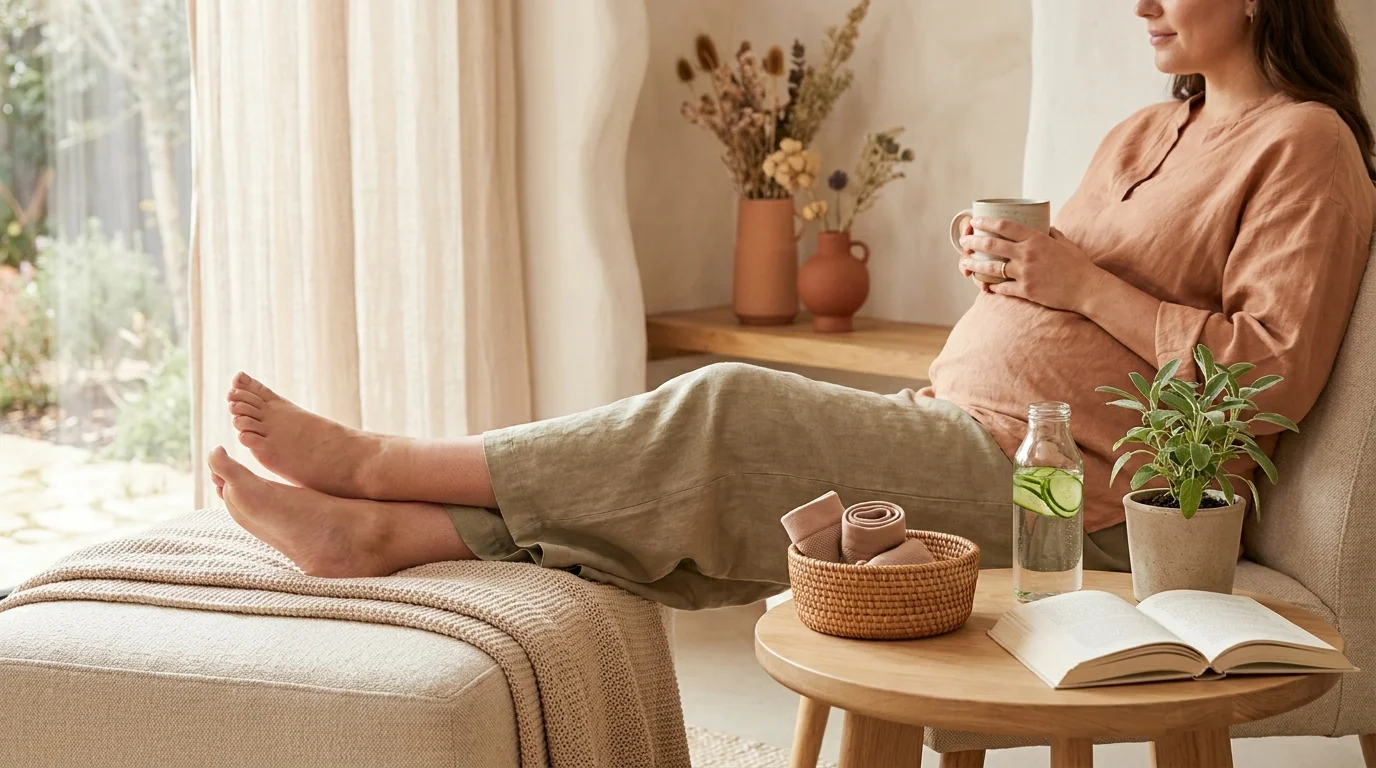
Elevating your legs above the level of your heart for 20 to 30 minutes several times a day uses gravity to encourage fluid to drain back toward your core and kidneys. Rest with your feet propped on pillows, a rolled blanket, or the arm of the sofa. Even elevating your feet a little while sitting at your desk makes a meaningful difference over the course of a day.
2. Move Regularly
Gentle movement activates the calf muscle pump, which helps push blood and fluid up out of your lower legs. A short walk every hour, ankle circles while seated, or calf raises while waiting in line are all effective. The American College of Obstetricians and Gynecologists recommends at least 150 minutes of moderate-intensity physical activity per week during an uncomplicated pregnancy, and even gentle walking goes a long way toward managing circulation-related swelling.
3. Stay Well Hydrated
Aim for at least 8 to 10 cups of fluid daily, primarily water. Adequate hydration signals to your kidneys that it is safe to excrete retained fluid rather than hold onto it. Herbal teas such as dandelion leaf (confirm safety with your provider) and cucumber-infused water can make hydration feel more enjoyable.
4. Adjust Your Salt Intake
You do not need to eliminate sodium entirely, and in fact doing so could interfere with blood pressure regulation. But reducing ultra-processed foods, canned soups, and salty snacks can make a noticeable difference. Focus on whole, minimally processed foods and season cooking with herbs rather than heavy salt.
5. Wear Compression Socks or Stockings
Graduated compression socks apply gentle pressure that is highest at the ankle and decreases up the leg, actively supporting the movement of fluid upward. They are one of the most evidence-backed tools available for pregnancy edema. Put them on first thing in the morning before fluid has a chance to pool. Many pharmacies and maternity stores carry stylish options that look nothing like the clinical versions of years past.
"Compression therapy remains underused in obstetric care, despite strong evidence for its effectiveness in reducing lower-limb edema and improving comfort in the later stages of pregnancy. I recommend them routinely to my patients from around 20 weeks onward."
Dr. Alison Edelman, MD, MPH, Professor of Obstetrics and Gynecology, Oregon Health and Science University
6. Choose Footwear Wisely
Opt for supportive, wide-fitting shoes with minimal constriction. Many women find they need to size up by half a size or more during the third trimester. Avoid footwear with tight straps across the foot or ankle. Supportive sandals with adjustable closures are a practical and comfortable choice.
7. Sleep on Your Left Side
Sleeping on your left side reduces compression on the inferior vena cava (the large vein running along your right side) and improves blood flow from your lower body back to your heart. This can meaningfully reduce overnight fluid accumulation. A full-length pregnancy pillow can help you maintain this position comfortably throughout the night.
8. Cool Water Soaks
Soaking your feet and ankles in cool water for 15 to 20 minutes provides temporary but real relief. The cool temperature causes superficial blood vessels to constrict slightly, which can reduce the rate at which fluid seeps into surrounding tissues. This is a lovely end-of-day ritual that many pregnant women find genuinely soothing.
Foods That Can Help
While no single food is a cure for pregnancy edema, some dietary choices support better fluid balance:
- Potassium-rich foods: Bananas, sweet potatoes, avocado, and leafy greens help balance sodium and support healthy fluid regulation.
- Magnesium-containing foods: Whole grains, nuts, seeds, and legumes. Some research suggests magnesium deficiency may worsen fluid retention.
- Foods with natural diuretic properties: Asparagus, cucumber, watermelon, and lemon in water may gently support kidney function.
- Anti-inflammatory foods: Omega-3-rich foods such as salmon, walnuts, and chia seeds support vascular health and may reduce tissue inflammation.
The USDA's nutrition guidance for pregnancy emphasizes the value of a varied, whole-food diet rich in fruits, vegetables, lean proteins, and healthy fats for supporting overall pregnancy health, including cardiovascular function.
When Swelling Becomes a Warning Sign
This is perhaps the most important section of this article. Not all pregnancy swelling is benign. Preeclampsia is a serious pregnancy complication characterized by high blood pressure and signs of organ damage, and sudden or severe swelling is one of its hallmarks.
Contact your healthcare provider immediately if you experience:
- Sudden, severe swelling in the face, hands, or feet that appears rapidly
- Swelling accompanied by a persistent headache that does not resolve with rest or paracetamol
- Visual disturbances such as blurred vision, flashing lights, or blind spots
- Pain or tenderness in your upper right abdomen
- Nausea or vomiting that comes on suddenly in the third trimester
- One leg that is significantly more swollen, red, or warm than the other, which could indicate a deep vein thrombosis
Does Swelling Mean Anything About My Baby?
Normal pregnancy edema has no impact on your baby. Your baby is cushioned within the amniotic sac and is not affected by fluid that pools in your tissues. However, because severe edema can be a symptom of preeclampsia, which does affect placental blood flow and fetal wellbeing, any concerning swelling is worth investigating promptly for your baby's sake as well as your own.
Will It Go Away After Birth?
Yes. For most women, pregnancy edema resolves within the first one to two weeks after delivery. In fact, many new mothers experience an increase in swelling in the first few days after birth, particularly if they received IV fluids during labor. This is temporary. Your kidneys will work overtime to eliminate the excess fluid, and you may notice increased urination and sweating in the early postpartum days. This is your body doing exactly what it should.
Key Statistics and Sources
- Up to 80% of pregnant women experience some degree of lower-limb edema during pregnancy. NICHD
- Blood volume increases by approximately 40 to 50% during a healthy pregnancy to support the growing fetus and placenta. NCBI
- Preeclampsia affects 5 to 8% of pregnancies worldwide, making symptom awareness critical. NICHD
- Graduated compression stockings reduce pregnancy-related lower-limb edema by an average of 30 to 40% in clinical assessments. NCBI
- ACOG recommends 150 minutes of moderate exercise per week during uncomplicated pregnancy, including for circulatory benefits. ACOG
- Deep vein thrombosis occurs in approximately 1 in 1,000 pregnancies, making one-sided leg swelling a symptom always worth investigating. CDC