Why Tummy Time Is One of the Best Things You Can Do for Your Baby
If you have spent any time in a new parent group or scrolled through a pediatrician's advice page, you have likely heard the phrase "back to sleep, tummy to play." It is one of those recommendations that sounds simple but carries enormous developmental weight. Tummy time, the practice of placing your awake and supervised baby on their stomach, is a foundational activity that supports nearly every physical milestone your child will hit in their first year of life.
And yet, it is also one of the activities that parents most commonly skip, cut short, or feel uncertain about, largely because many babies protest it loudly at first. This guide is here to change that. Understanding exactly why tummy time matters, when to start, and how to make it work for your specific baby can transform it from a dreaded chore into a genuinely enjoyable part of your day together.
What Tummy Time Actually Does for Your Baby
When your baby lies on their tummy, they are doing far more work than it appears. Every moment spent in that position asks their body to recruit muscles that are simply not engaged when they are lying on their back or being held upright in a carrier.
Building Core and Neck Strength
The muscles of the neck, shoulders, upper back, and core are all activated during tummy time. Your baby must lift their head against gravity, which strengthens the cervical extensors, those small but critical muscles running along the back of the neck. This neck control is the prerequisite for everything that follows: rolling, sitting, crawling, and eventually walking. Without adequate tummy time, these muscles simply do not get the practice they need.
Preventing Flat Head Syndrome
Since the American Academy of Pediatrics introduced the "Back to Sleep" campaign in 1994, rates of sudden infant death syndrome (SIDS) have dropped dramatically. However, a related condition called positional plagiocephaly, or flat head syndrome, has increased because babies now spend more time on their backs. Tummy time when your baby is awake and supervised counterbalances this by relieving pressure on the back of the skull while it is still soft and moldable.
According to the National Institute of Child Health and Human Development, positioning babies on their tummies during supervised waking hours is one of the key strategies for reducing the risk of flat spots developing on the head.
Supporting Sensory and Neurological Development
Tummy time also gives your baby a completely different sensory experience of the world. They feel different textures against their palms, forearms, and cheeks. They see the room from a new angle. They learn to coordinate their eyes to focus at varying distances. All of this sensory input feeds the developing nervous system and builds the neural pathways that underpin learning and coordination.
"Tummy time is not just about physical strength. It is a full neurological workout. The proprioceptive input babies receive in that position is critical for body awareness and the development of purposeful movement." — Dr. Cara Pappas, PT, PhD, Pediatric Physical Therapist, University of Kansas Medical Center
When to Start Tummy Time
The answer may surprise you: from day one. Many parents assume tummy time is something to introduce at a few weeks of age, but the American Academy of Pediatrics recommends beginning tummy time as early as the first day home from the hospital, as long as your baby is full-term and healthy.
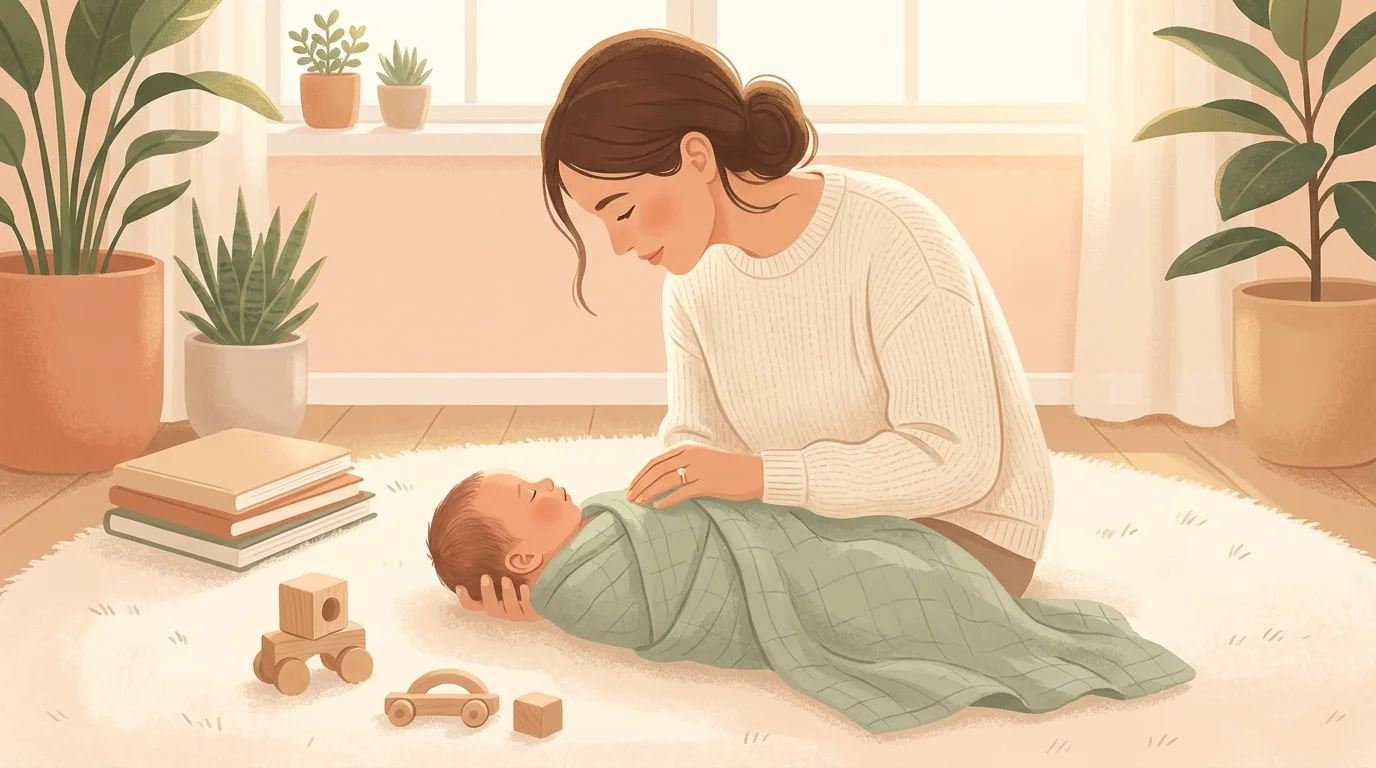
In the very early days, tummy time does not need to look like a baby placed on a play mat staring at the floor. Chest-to-chest tummy time, where your baby rests tummy-down on your chest while you recline, counts. So does lying your baby across your lap while you gently pat their back. These gentler positions introduce the sensory experience of being prone without the full challenge of lifting against gravity from a flat surface.
If your baby had a caesarean birth or you are waiting for the umbilical stump to fall off, you can still do tummy time safely. Simply avoid placing pressure directly on the stump and use the chest-to-chest method until the area has healed.
How Much Tummy Time Does Your Baby Need?
The goal, according to most pediatric guidelines, is to work toward a total of 30 minutes of tummy time per day by the time your baby is around three months old. That does not mean 30 unbroken minutes. Short, frequent sessions are far more effective and far more sustainable for both of you.
Tummy Time Targets by Age
- 0 to 2 weeks: 2 to 3 sessions of 1 to 2 minutes each day, using chest-to-chest or lap positions
- 1 month: Aim for 3 to 5 minutes per session, 2 to 3 times per day
- 2 to 3 months: Build toward 10 to 15 minutes per session, totalling 30 minutes across the day
- 4 to 6 months: Continue daily sessions; many babies begin rolling from tummy to back, which is a natural progression
Timing matters too. Placing a baby who has just fed on their tummy is a recipe for discomfort and spitting up. Aim to do tummy time roughly 30 minutes after a feed, when your baby is alert and content rather than hungry or tired.
Why Your Baby Might Hate Tummy Time (and What to Do)
Here is the honest truth: most newborns dislike tummy time at first. Some dislike it intensely. This is completely normal and does not mean you should stop. It simply means you need to approach it thoughtfully and incrementally.
Get Down on Their Level
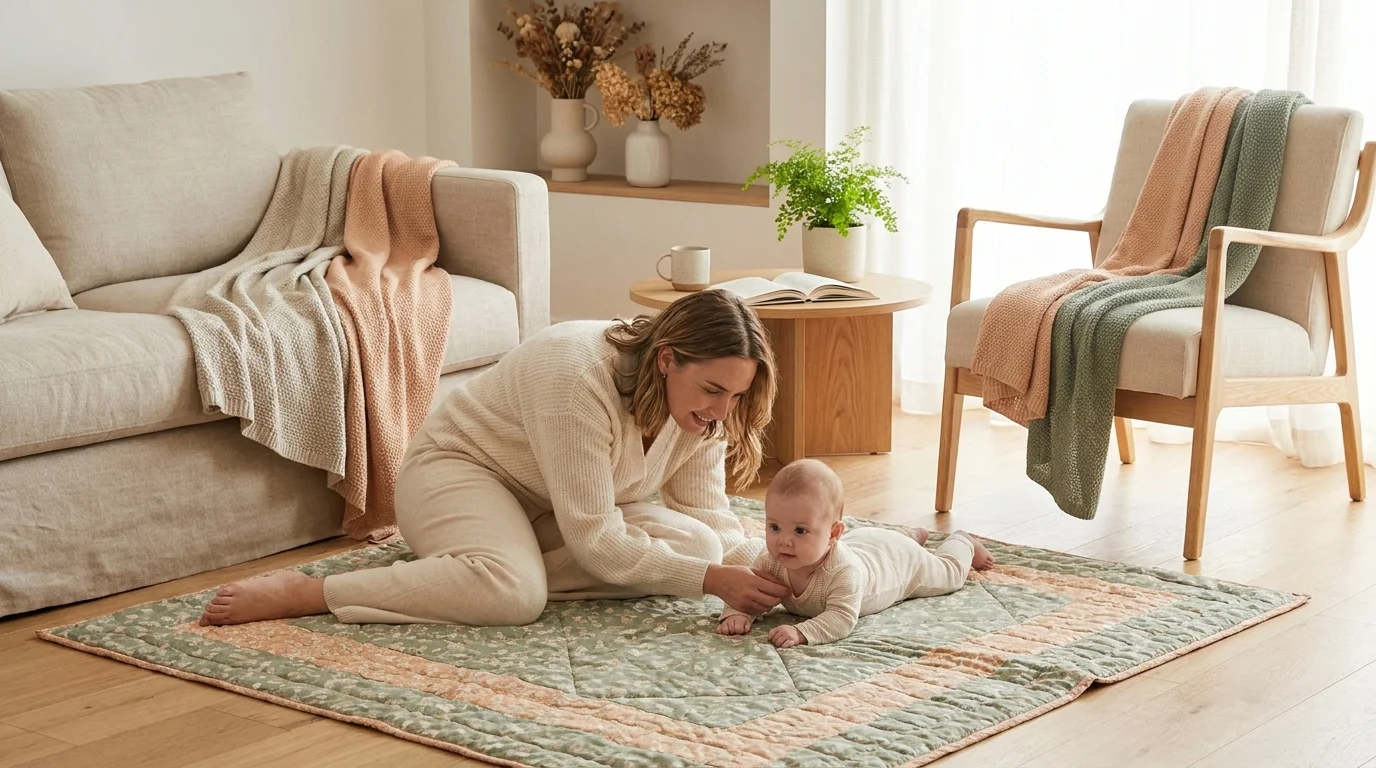
One of the most effective things you can do is lie on the floor face-to-face with your baby during tummy time. Your voice, your smell, and your face are the most compelling things in your baby's world right now. Your presence is motivating in a way that no toy can replicate.
Use a Rolled Towel or Nursing Pillow
Placing a small, rolled towel or a nursing pillow under your baby's chest (just below the armpits) can make the position significantly more comfortable for babies who find it difficult. This slight elevation gives them a mechanical advantage when lifting their head and reduces the frustration that leads to crying. As they grow stronger, you can gradually reduce the support.
Try the Lap Position
Draping your baby face-down across your knees while you sit is a tummy time position that many babies tolerate far better than the floor. You can gently sway your legs or rub their back, which adds soothing sensation to what can otherwise feel like a stressful position for little ones.
Introduce Mirrors and High-Contrast Images
Babies are powerfully drawn to faces and high-contrast black-and-white patterns. Placing a baby-safe mirror or a set of high-contrast cards at eye level gives your baby something compelling to look at, which extends the time they are willing to stay in position. Research on early visual development suggests that high-contrast images are among the most stimulating for the immature visual system of a newborn, which at birth can only clearly see objects roughly 20 to 30 centimetres away.
"Parents often feel guilty when their baby cries during tummy time, but crying for a short period during a physically challenging activity is not distress. It is effort. We encourage parents to stay present, offer reassurance, and let the session end on a slightly positive note rather than stopping at the peak of crying." — Dr. Rachel Sherwood, OTR/L, Pediatric Occupational Therapist, Cincinnati Children's Hospital
Tummy Time Positions to Try
Variety keeps tummy time interesting for your baby and ensures different muscle groups are challenged over time. Here are the main positions to rotate through:
Chest-to-Chest
You recline at roughly a 45-degree angle, and your baby rests tummy-down on your chest. This is the gentlest introduction and is particularly calming because of skin-to-skin contact.
Lap Drape
Sit in a chair or on the floor with your knees together. Lay your baby face-down across your thighs with their head slightly higher than their bottom. Your lap provides gentle pressure on their tummy, which many babies find soothing, particularly those who experience gas discomfort.
Floor Play Mat
This is the classic tummy time position and becomes the primary one after the first few weeks. Place your baby on a firm, flat surface on a comfortable but not overly cushioned mat. Get down to their level and interact with them throughout.
Supported by a Nursing Pillow
Place the nursing pillow on the floor and drape your baby over it so that their chest and head are elevated. This works beautifully for babies who are still building the strength to lift their heads fully from a flat surface.
Tummy Time and Developmental Milestones
The time your baby spends on their tummy directly maps onto the physical milestones you will see emerge over the first six months. Regular tummy time is associated with earlier rolling, stronger sitting posture, and more confident early crawling movements. A study published in the journal Pediatrics found that infants who received more tummy time in their early weeks achieved motor milestones significantly earlier than those who had limited prone play time.
By around two months, you will likely see your baby beginning to lift their head to 45 degrees. By three to four months, many babies can push up to 90 degrees and start bearing some weight through their forearms. By five to six months, you may notice your baby starting to push up onto extended arms and begin pivoting or even lunging forward, the precursor to crawling.
Key Takeaways
- Start tummy time from day one, using gentle chest-to-chest contact in the early days
- Work toward 30 minutes of total daily tummy time by three months of age
- Short, frequent sessions are more effective than single long ones
- Your face, voice, and presence are the most powerful tummy time tools you have
- Protest is normal; stopping at the peak of crying can reinforce avoidance
- Variety in position keeps sessions engaging and targets different muscle groups
A Note on Safety
Tummy time should always happen when your baby is awake and you are actively supervising them. Never leave a sleeping baby on their stomach. The moment your baby falls asleep during tummy time, gently roll them onto their back. The "back to sleep, tummy to play" rule remains the gold standard for safe infant positioning.
If your baby consistently seems to struggle more on one side, has limited neck rotation, or strongly resists turning their head in a particular direction, mention it to your pediatrician. These can be signs of torticollis, a tightness in one of the neck muscles that is highly treatable with gentle physical or occupational therapy when caught early.
Key Statistics and Sources
- SIDS rates dropped by more than 50% following the introduction of the "Back to Sleep" campaign in 1994, increasing the importance of supervised tummy time as a counterbalance. NICHD Safe to Sleep
- Positional plagiocephaly affects an estimated 20 to 46% of healthy infants, with tummy time being a primary prevention strategy. National Institutes of Health
- Infants with more tummy time experience achieve motor milestones significantly earlier than those with limited prone play. Pediatrics Journal, 2008
- The AAP recommends supervised tummy time beginning as early as the first day home from the hospital for healthy, full-term infants. American Academy of Pediatrics
- By three months, babies should ideally accumulate at least 30 minutes of tummy time per day, spread across multiple shorter sessions throughout the day. CDC Developmental Milestones