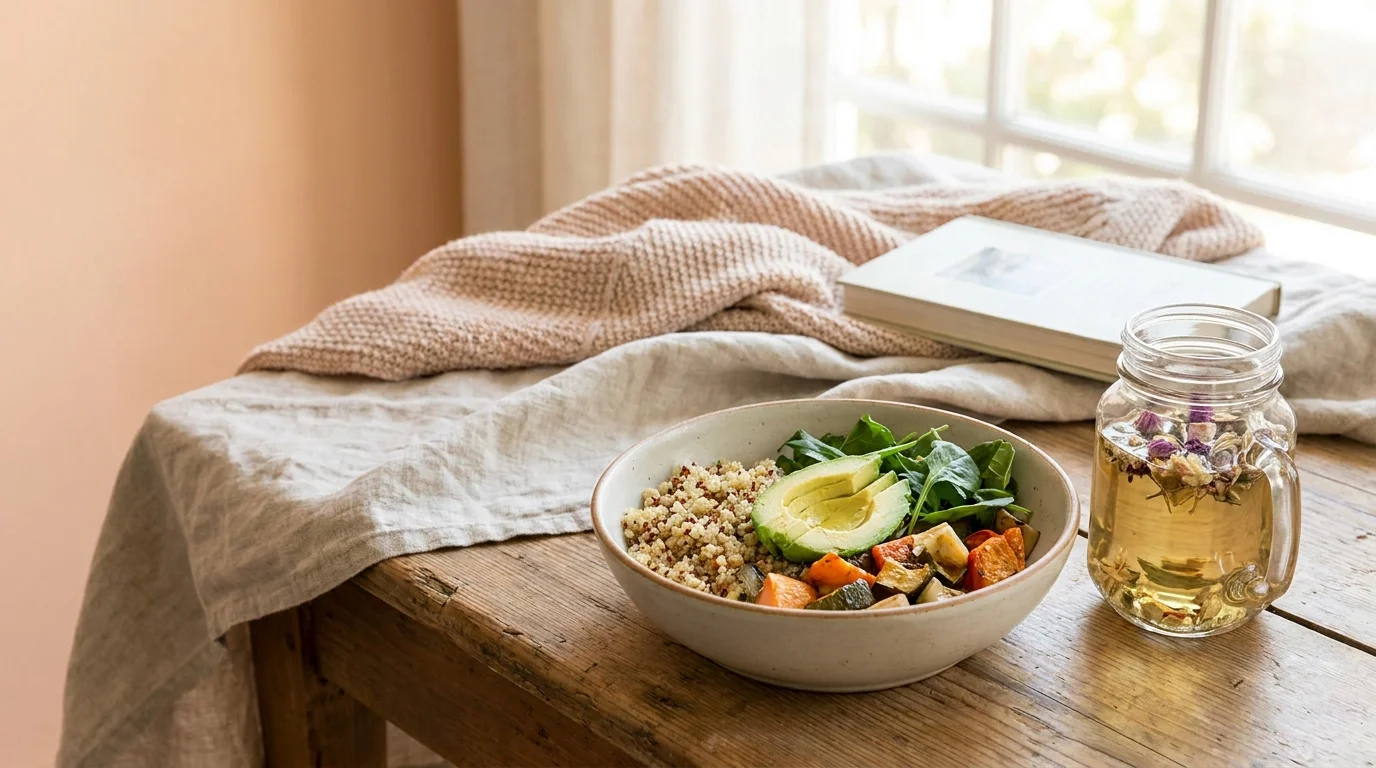
Why Postpartum Nutrition Deserves Its Own Spotlight
You spent months carefully reading labels, avoiding certain foods, and loading up on folate. Then your baby arrived, and somehow the focus shifted entirely to feeding them rather than feeding yourself. It happens to almost every new mother, and it makes a certain kind of sense: a newborn's needs are loud and immediate. Yours are quieter, easier to push to tomorrow.
But what you eat in the weeks and months after birth has a profound impact on how quickly your body heals, how steadily your energy returns, whether your milk supply is robust, and how resilient you feel emotionally. Postpartum nutrition is not about bouncing back or returning to a pre-pregnancy body. It is about giving your body the raw materials it needs to recover from one of the most physically demanding events a human can go through.
This guide breaks down exactly what your body needs, which foods deliver it most efficiently, and how to make nourishing yourself practical when you are also caring for a newborn.
What Your Body Is Actually Recovering From
Childbirth, whether vaginal or via caesarean section, involves significant blood loss, tissue repair, hormonal upheaval, and in many cases, the ongoing metabolic demand of breastfeeding. The National Institute of Child Health and Human Development notes that the postpartum period involves complex physiological changes that can take months to fully resolve.
Blood volume, which increased by up to 50% during pregnancy, begins to normalize. Uterine involution, the process of the uterus returning to its pre-pregnancy size, requires energy. Perineal or abdominal incision sites need protein and micronutrients to heal. And if you are breastfeeding, your body is producing a food source that contains hundreds of bioactive compounds, demanding an extra 400 to 500 calories per day above your pre-pregnancy baseline, according to the 2020-2025 Dietary Guidelines for Americans.
"The postpartum period is genuinely a time of nutritional vulnerability. Mothers are often depleted in iron, omega-3 fatty acids, iodine, and choline, nutrients that matter not just for their own recovery but for the quality of breast milk they produce."
- Dr. Judith Brown, PhD, RD, Professor Emerita of Nutrition, University of Minnesota
The Most Critical Postpartum Nutrients
Iron: Replenishing What Was Lost
Blood loss during delivery is normal, but it leaves many new mothers iron-depleted. Iron-deficiency anaemia after birth is associated with fatigue, cognitive fog, and a lowered threshold for postpartum depression. Rich food sources include lean red meat, chicken, lentils, fortified cereals, and tofu. Pairing these with a source of vitamin C significantly improves absorption. If you had significant blood loss or your midwife flagged low iron levels, a supplement may also be warranted. Ask your care provider to check your levels at your postnatal appointment.
Protein: The Building Block of Repair
Every cell your body repairs, from uterine lining to skin around a perineal tear, is built from protein. Breastfeeding mothers need approximately 71 grams of protein per day, compared to the general adult recommendation of 46 grams. Good sources include eggs, Greek yoghurt, legumes, fish, chicken, and cottage cheese. Aiming for a protein source at every meal and most snacks is a practical way to hit this target without tracking obsessively.
Omega-3 Fatty Acids: For Your Brain and Your Baby's
DHA, a type of omega-3 fat found primarily in oily fish, is critical for infant brain development and is secreted into breast milk. It also plays a significant role in maternal mood regulation. Research published by the National Institutes of Health Office of Dietary Supplements indicates that many women enter the postpartum period with depleted DHA stores after supporting fetal brain development throughout pregnancy. Salmon, sardines, mackerel, and herring are excellent sources. If you eat little fish, an algae-based DHA supplement is a plant-based alternative your doctor can advise on.
Calcium: Protecting Your Bones
If calcium intake is insufficient while breastfeeding, the body draws on maternal bone stores to maintain breast milk calcium levels. This is temporary and typically reverses after weaning, but it makes adequate intake important during the postpartum period. Dairy products, fortified plant milks, white beans, broccoli, and almonds all contribute meaningfully. Aim for around 1,000 mg per day, or 1,300 mg if you are under 19.
Iodine and Choline: The Overlooked Pair
Both iodine and choline are essential for infant brain development and are transferred through breast milk, yet they are consistently underconsumed by postpartum women. Iodine is found in dairy, eggs, seafood, and iodized salt. Choline is abundant in eggs, beef liver, salmon, and soybeans. If you are taking a postnatal supplement, check that it includes both of these, as many standard multivitamins fall short.
Vitamin D: Often Deficient, Easily Overlooked
Vitamin D deficiency is common in new mothers, particularly in those who had limited sun exposure during pregnancy or have darker skin tones. It plays a role in mood regulation, immune function, and calcium absorption. Breast milk tends to be low in vitamin D even when mothers are replete, which is why many health authorities recommend infant drops separately. For the mother, fatty fish, fortified foods, and careful supplementation guided by a healthcare provider are key strategies.
Foods to Prioritize in Your Postpartum Plate
Postpartum Power Foods at a Glance
- Eggs: Rich in protein, choline, vitamin D, and healthy fats
- Oats: Complex carbohydrates, iron, and beta-glucan fiber; traditionally linked to milk supply support
- Salmon: DHA omega-3s, protein, and vitamin D in one serving
- Lentils and legumes: Plant-based protein, iron, and folate
- Leafy greens: Calcium, folate, vitamin K, and iron
- Full-fat yoghurt: Calcium, protein, probiotics for gut health
- Nuts and seeds: Healthy fats, zinc, magnesium, and quick energy
- Sweet potatoes: Beta-carotene, potassium, and complex carbohydrates
Hydration: The Forgotten Pillar
Breast milk is approximately 87% water. Producing it requires consistently good fluid intake, and dehydration is one of the fastest ways to feel depleted, foggy, and constipated in the postpartum weeks. A practical target for breastfeeding mothers is around 13 cups (roughly 3 litres) of fluid daily, though individual needs vary with climate, body size, and activity level.
A simple habit: keep a large water bottle within reach wherever you nurse or feed. Drink a glass of water every time you sit down for a feeding session. Herbal teas, diluted fruit juices, and water-rich foods like cucumber, melon, and soups all count toward your daily intake.
"New mothers are frequently so focused on output, whether that is milk volume or baby weight gain, that they completely neglect their own intake. Adequate hydration is foundational to everything else: energy, mood, milk supply, digestion. It is often the first thing I address."
- Dr. Lauren Antonucci, MS, RDN, CSSD, Board-Certified Sports and Perinatal Dietitian, Nutrition Energy, New York
Managing Nutrition When You Have No Time
Knowing what to eat and actually eating it are two very different challenges in those early weeks. Here are strategies that work in real postpartum life:
Batch Cook Before Birth (or Ask Someone Else To)
The most practical gift you can give your postpartum self is a freezer stocked with nourishing meals. Soups, stews, lentil dishes, frittatas, and energy balls all freeze well and can be ready in minutes. If friends and family ask what they can bring after the birth, meals are the answer.
Think Assembling, Not Cooking
A plate of smoked salmon on whole grain crackers with avocado and a handful of cherry tomatoes takes two minutes and delivers protein, omega-3s, fiber, and vitamins. Postpartum eating does not need to be elaborate. It needs to be consistent.
Keep One-Handed Snacks Everywhere
Trail mix, boiled eggs, cheese portions, whole grain rice cakes with nut butter, yoghurt pouches, and fruit are all foods you can eat while holding a baby. Stock these within easy reach of where you spend most of your feeding time.
Accept Help Gracefully
Allowing others to nourish you is not a sign of failure. It is a sensible strategy. Meal trains, grocery delivery subscriptions, and ready-made meal services are all legitimate tools during a period when your energy is finite and your baby is the priority.
What About Weight and Caloric Restriction?
This deserves a direct answer: the early postpartum period is not the time to restrict calories. Your body needs a surplus to heal, to produce milk, and to sustain your energy through interrupted sleep and intense caregiving. Significant caloric restriction while breastfeeding can reduce milk supply, impair wound healing, and worsen mood.
Gradual, gentle movement introduced after your care provider gives clearance (typically six weeks postpartum for uncomplicated vaginal births, longer for caesareans) combined with consistent nourishing eating tends to support healthy weight changes over time. Many women find that breastfeeding, when nutrition is adequate, naturally supports a gradual return toward their pre-pregnancy weight over the first year.
Postpartum Nutrition and Mood
The connection between what you eat and how you feel emotionally is significant and underappreciated in postpartum care. Iron deficiency increases risk of low mood and cognitive difficulty. Omega-3 depletion is associated with a higher risk of postpartum depression. Blood sugar instability from skipping meals amplifies irritability and anxiety. Adequate protein supports serotonin and dopamine production.
This does not mean that nutrition alone prevents or treats postpartum depression, and if you are experiencing persistent low mood, anxiety, or intrusive thoughts, please reach out to your care provider or a mental health professional. But it does mean that nourishing yourself consistently is one of the most meaningful acts of self-care available to you during this period.
Key Statistics and Sources
- Breastfeeding mothers require an estimated 400-500 additional calories per day above pre-pregnancy needs. Dietary Guidelines for Americans 2020-2025
- Up to 27% of women experience iron-deficiency anaemia in the postpartum period, contributing to fatigue and mood disturbance. NIH, National Library of Medicine
- DHA concentrations in breast milk are significantly influenced by maternal dietary intake and are critical for infant neurodevelopment. NIH Office of Dietary Supplements
- Breastfeeding mothers need approximately 71g of protein daily, compared to the standard adult female recommendation of 46g. National Academies of Sciences, Engineering, and Medicine
- Vitamin D deficiency affects an estimated 40% of postpartum women in the United States. NIH Office of Dietary Supplements
- Breast milk is approximately 87% water, making maternal hydration a key factor in milk production and quality. National Library of Medicine, Breastfeeding: A Guide for the Medical Profession