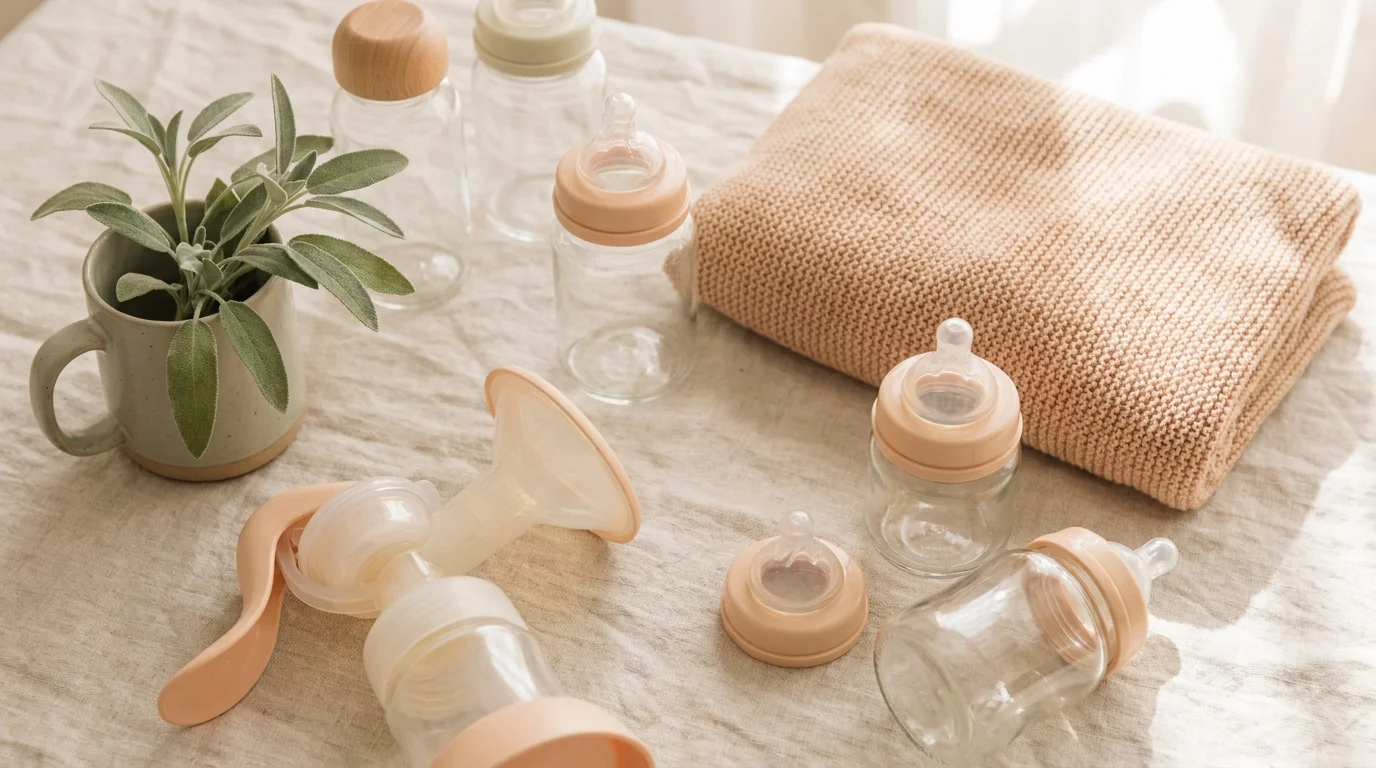
Pumping and Bottle Feeding: What No One Tells You
Whether you are returning to work, building a freezer stash, sharing feeding responsibilities with a partner, or simply need a break, pumping and bottle feeding can be an incredibly valuable part of your postpartum journey. And yet, many new parents feel blindsided by how much there is to learn, from choosing the right pump and getting a proper flange fit, to knowing when and how to introduce a bottle without disrupting breastfeeding.
This guide walks you through the essentials in a practical, judgment-free way. Every feeding path is valid, and knowing your options means you can make the choices that work best for you and your baby.
Why Parents Choose to Pump
There is no single reason people pump, and there is no single "type" of pumping parent. Some common situations include:
- Returning to work or school and needing to maintain supply while away from baby
- Latching difficulties where a baby is not yet able to feed directly at the breast effectively
- Premature or NICU babies who need expressed milk but cannot yet breastfeed
- Oversupply management by pumping to relieve uncomfortable engorgement
- Building a freezer stash for peace of mind or future flexibility
- Shared feeding so a partner or caregiver can participate in night feeds
- Exclusively pumping (EP) for parents who choose not to latch or cannot do so
Whatever your reason, understanding the mechanics of pumping helps you do it effectively and sustainably.
Choosing the Right Breast Pump
Not all pumps are created equal, and the right choice depends on how often you plan to pump and your lifestyle needs.
Hospital-Grade vs. Personal-Use Pumps
Hospital-grade pumps, also called multi-user pumps, are the most powerful option. They cycle more efficiently and are especially recommended when establishing supply in the early weeks or for parents of premature babies. You can typically rent them from hospitals, lactation consultants, or pharmacies.
Personal-use double electric pumps are the most common choice for everyday pumping. Many insurance plans in the United States cover a breast pump at no cost under the Affordable Care Act, so check your coverage before purchasing. Healthcare.gov outlines covered preventive services, which include breast pumps and lactation support.
Wearable pumps, sometimes called hands-free pumps, have become increasingly popular. They fit inside a nursing bra and allow you to pump discreetly while doing other things. They tend to be less powerful than traditional pumps, so they work best once supply is well established rather than in the early weeks.
Getting the Right Flange Size
This is one of the most overlooked aspects of pumping comfort and effectiveness. The flange (also called a breast shield) is the funnel-shaped cup that fits over your nipple. Using the wrong size can cause pain, nipple damage, and reduced milk output.
A correctly sized flange means your nipple moves freely in the tunnel without your areola being pulled in excessively. Most pumps come with 24mm and 28mm flanges, but many people need smaller sizes, often in the 17-21mm range. A lactation consultant can help you measure correctly.
"Flange fit is the single most common reason parents experience pain while pumping or see lower output than expected. It is a quick fix that makes an enormous difference."
Dr. Alison Stuebe, MD, MSc, Professor of Obstetrics and Gynecology, University of North Carolina School of Medicine
When to Start Pumping
Timing depends on your situation. If your baby is in the NICU or has latch difficulties, your care team will likely advise starting hand expression within the first hour after birth, then transitioning to a pump as soon as possible to signal your body to produce milk.
For parents who are primarily breastfeeding and want to introduce occasional bottles or build a freezer stash, most lactation experts suggest waiting until breastfeeding is well established, typically around 4 to 6 weeks, before adding regular pumping sessions. Pumping too early in large volumes can contribute to oversupply and engorgement.
If you are planning to return to work, starting to pump and offer bottles about 2 to 3 weeks before your return date gives your baby time to accept the bottle and gives you time to build a modest stash without feeling overwhelmed.
How to Pump Effectively
Getting a good milk output involves more than just attaching a pump. These strategies make a real difference:
Pump Frequently and Consistently
Your supply is driven by demand. The more frequently milk is removed from the breast, the more your body produces. If you are exclusively pumping, aim for 8 to 12 sessions in 24 hours in the early weeks, mirroring how often a newborn feeds. As supply stabilises, you may be able to reduce sessions gradually.
Use Heat and Massage
Applying a warm compress to your breasts for a few minutes before pumping, then massaging in circular motions toward the nipple, can help trigger letdown and improve output. Some parents find that looking at photos or videos of their baby, or even smelling a piece of their baby's clothing, helps milk flow more readily.
Try Hands-On Pumping
Research from Stanford University found that combining breast massage with pumping, a technique called "hands-on pumping," significantly increases milk output and caloric content of expressed milk. Stanford Medicine's guide on maximising milk production outlines the method step by step.
Stay Relaxed
Stress actively inhibits oxytocin, the hormone responsible for milk letdown. If you find yourself anxiously watching the bottles fill, try covering them with a cloth so you focus less on output. Deep breathing, a calming podcast, or simply closing your eyes can help.
Key Pumping Tips at a Glance
- Check your flange size before assuming output is the problem
- Pump at consistent times to regulate supply
- Use warm compresses and breast massage before and during sessions
- Stay hydrated and well-nourished: milk production is energy-intensive
- A session of 15-20 minutes is usually sufficient; stopping when flow slows is fine
Storing Breast Milk Safely
Proper storage protects the nutrition and safety of your expressed milk. The CDC's breast milk storage guidelines are the gold standard reference for this:
- Room temperature (up to 77°F / 25°C): up to 4 hours
- Refrigerator (40°F / 4°C or colder): up to 4 days
- Freezer compartment inside a refrigerator: up to 2 weeks
- Upright or chest freezer (0°F / -18°C): up to 12 months (best quality within 6 months)
Store milk in small portions of 2 to 4 ounces to reduce waste. Label each bag or container with the date and volume. When thawing, move milk from the freezer to the refrigerator the night before, or thaw under warm running water. Never microwave breast milk: it destroys beneficial antibodies and creates dangerous hot spots.
Introducing a Bottle to a Breastfed Baby
Many breastfed babies take to a bottle without issue. Others need a little patience and strategy. Here is what tends to help:
Timing Matters
Offer the bottle when your baby is calm and mildly hungry, not frantically crying. A baby who is too hungry becomes frustrated easily and may refuse anything that is not the breast. A calm, alert state is ideal for learning something new.
Let Someone Else Offer It
Many babies refuse a bottle from the person they associate most strongly with breastfeeding. Having a partner, grandparent, or caregiver offer the first few bottles while you are out of the room, or even out of the house, often removes the struggle entirely.
Try Paced Bottle Feeding
Paced bottle feeding is a technique that mimics breastfeeding more closely, helping preserve the breastfeeding relationship and preventing overfeeding. Hold the baby in a semi-upright position, hold the bottle horizontally rather than tipped steeply downward, and allow the baby to control the pace by tilting the bottle away briefly every few swallows. This respects their hunger and fullness cues.
"Paced bottle feeding helps babies transition between breast and bottle more smoothly and reduces the risk of bottle preference over time. It is worth taking the time to learn the technique properly."
Nancy Mohrbacher, IBCLC, FILCA, Lactation Consultant and Author, Chicagoland Breastfeeding Support
Nipple Flow Rate
Choose a slow-flow or newborn-flow bottle nipple regardless of your baby's age. Faster flow rates can overwhelm babies and cause them to prefer the bottle simply because milk comes more easily, undermining breastfeeding. Slow-flow nipples keep feeding more effort-comparable to the breast.
Managing Supply When Pumping and Breastfeeding Together
One concern many parents have is whether pumping will cause oversupply, or conversely, whether skipping a pump session will reduce their supply. Here are some principles to keep in mind:
- If your baby feeds directly and you also pump, your body will gradually calibrate to the total demand. Consistency is key.
- If you miss a pump session, one missed session is unlikely to reduce supply significantly. Repeated skipped sessions over days can begin to signal your body to produce less.
- Power pumping, which mimics cluster feeding by pumping for shorter intervals with rest breaks over about an hour, can temporarily boost supply if you feel it dipping.
- Staying well hydrated and eating enough calories matters. Producing milk requires approximately 400 to 500 extra calories per day.
Exclusively Pumping: What to Know
Some parents choose or need to exclusively pump, meaning all of their baby's feeds come from a bottle of expressed milk. This is a valid and loving choice that requires its own set of strategies.
Exclusively pumping can be physically and emotionally demanding because you are essentially feeding twice: once by pumping, once by bottle feeding. Having support in place, a good pump, a comfortable pumping station, and realistic expectations about the time commitment, makes it far more sustainable. Many parents find online communities of exclusively pumping parents invaluable for encouragement and practical advice.
Key Statistics and Sources
- Approximately 85% of breastfeeding mothers in the US pump at some point during their breastfeeding journey. CDC Breastfeeding Report Card
- Hands-on pumping has been shown to increase milk output by up to 48% compared to pumping alone in some studies. Stanford Medicine
- The WHO recommends exclusive breastfeeding for the first 6 months, with continued breastfeeding alongside complementary foods up to 2 years and beyond. World Health Organization
- Incorrect flange sizing is cited as a contributing factor in pain and reduced output for a significant proportion of pumping parents. NIH - National Library of Medicine
- The ACA requires most health plans to cover breast pump equipment and lactation counselling at no cost. HealthCare.gov
- Expressed breast milk stored in a deep freezer maintains nutritional quality for up to 12 months. CDC - Proper Handling and Storage of Human Milk