Why Baby Massage Is More Than Just a Nice Thing to Do
There is something quietly powerful about placing your hands on your newborn and moving them with slow, intentional care. Baby massage is one of those practices that looks simple from the outside but carries real, measurable benefits for both infant and parent. Research consistently shows that regular touch therapy supports weight gain in preterm infants, reduces crying in babies with colic, improves sleep quality, and deepens the parent-child bond in ways that ripple forward into development.
Yet many new parents hesitate. They worry about pressing too hard, touching the wrong spot, or doing it wrong altogether. The good news is that you do not need a certification to give your baby a meaningful massage. You need warmth, presence, and a few solid techniques to get started.
What the Research Actually Says
The science behind infant massage is robust and has been growing for decades. A landmark body of work from the Touch Research Institute at the University of Miami demonstrated that premature infants who received daily massage gained weight up to 47 percent faster than those who did not, and were discharged from hospital earlier. While your full-term baby may not need weight-gain support, the underlying mechanisms, including the release of growth hormone, the activation of the vagus nerve, and the reduction of cortisol, apply to all infants.
"Touch is the first sense to develop in utero and the primary language of early infancy. Consistent, responsive touch from a caregiver directly shapes how the infant nervous system learns to regulate itself." — Dr. Tiffany Field, PhD, Director, Touch Research Institute, University of Miami School of Medicine
A systematic review published in the journal Complementary Therapies in Clinical Practice found that infant massage reduced crying and improved sleep duration across multiple studies involving healthy term newborns. Parents who practiced massage also reported lower levels of postnatal anxiety and greater confidence in reading their baby's cues.
Separately, research from the National Institute of Child Health and Human Development highlights the importance of caregiver responsiveness in the first months of life for healthy brain architecture. Baby massage, practiced consistently, is one of the most accessible ways to build that responsiveness into your daily rhythm.
When Can You Start?
You can begin gentle touch from the very first days, but most practitioners recommend waiting until the umbilical cord stump has fallen off before doing a full-body massage, typically around two to three weeks postpartum. In the earliest days, simple skin-to-skin contact and light stroking during feeding or nappy changes already counts as beneficial touch.
By four to six weeks, most babies are ready for a more structured short massage session. Start with just five minutes and build up as your baby shows interest and tolerance.
Key Takeaway
Look for your baby's engagement cues before and during massage: eye contact, relaxed limbs, a calm face. If your baby turns away, arches their back, or begins to cry, pause or stop. A massage should always follow your baby's lead.
Setting the Scene
The environment matters more than technique when you are first starting out. A calm, warm baby is far more receptive than a hungry, overstimulated, or tired one. Here are the conditions to aim for:
- Timing: Choose a time when your baby is alert but relaxed, typically 30 to 45 minutes after a feed, not right before a feed when hunger may cause frustration.
- Warmth: The room should be comfortably warm, around 24 to 26 degrees Celsius, since your baby will be undressed.
- Surface: A soft towel or changing mat placed on the floor is safer than a raised surface.
- Oil: Use an unscented, food-grade oil such as sunflower or coconut oil. Avoid mineral oils and nut-based oils until you are confident there are no allergies. The American Academy of Pediatrics recommends patch-testing any new product on a small area of skin first.
- Your state: Take a few slow breaths before you begin. Your nervous system communicates directly to your baby's through touch and tone of voice.
A Step-by-Step Full Body Massage
The following sequence moves from legs upward, which tends to be less intrusive for newborns who are still getting used to being touched. Always warm the oil between your palms before contact.
Legs and Feet
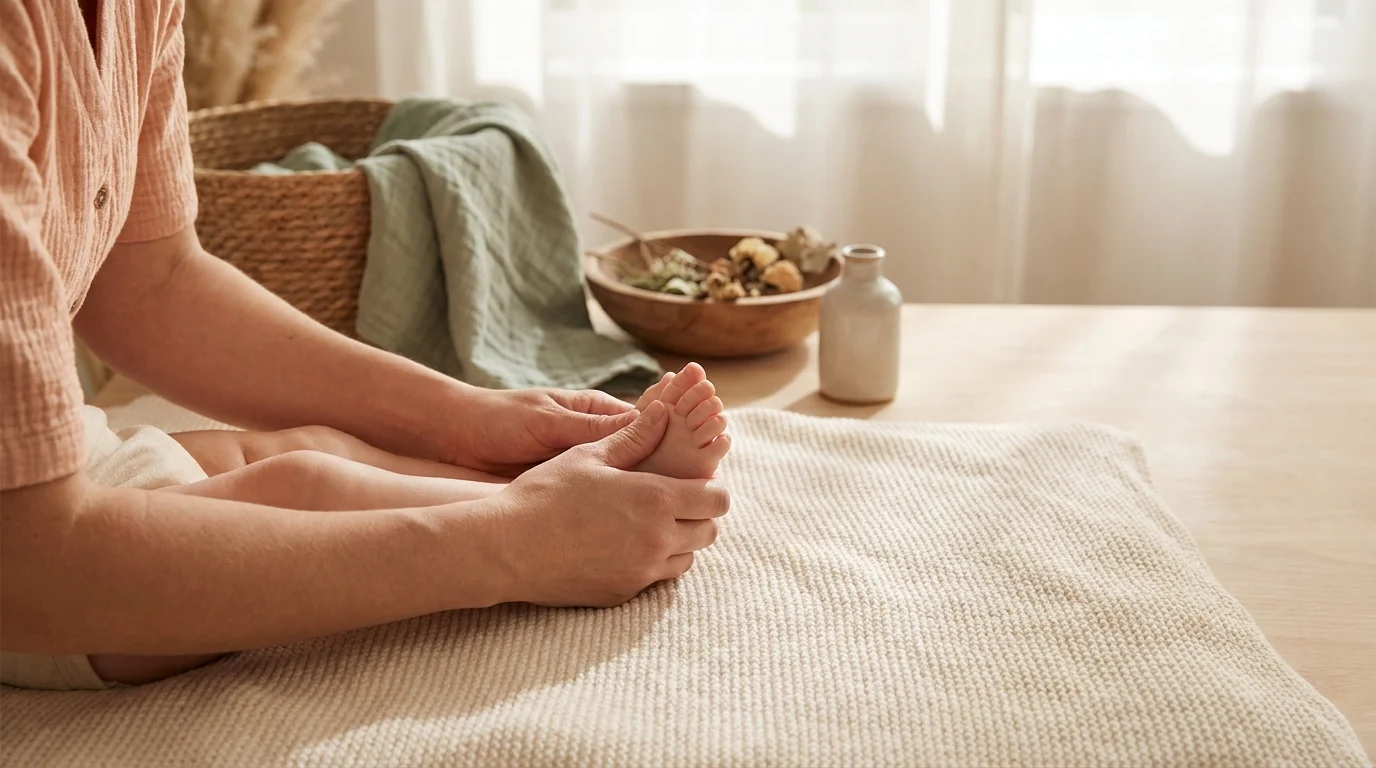
Begin with the legs, as most babies find this area the least sensitive. Wrap both hands around your baby's thigh and stroke downward toward the ankle with a gentle, rhythmic milking motion. Repeat three to four times on each leg. Then take the foot and use your thumbs to stroke the sole from heel to toes in small circles. Gently rotate each ankle and give each tiny toe a light squeeze.
Tummy
The tummy is where many parents feel most cautious, but gentle abdominal massage can genuinely ease gas and support digestion. Use the flat of your fingers and stroke downward from the ribs to the navel. Then try the "I Love You" technique: trace a vertical line down the left side of the abdomen (the letter I), then an inverted L shape across the top and down the left side, and finally an inverted U shape across the bottom and both sides. Always move in the direction of the natural digestive flow, which is clockwise when looking down at your baby.
"Parents are often surprised by how much a simple tummy massage can do. When done consistently, it can reduce the duration and frequency of gas-related fussiness significantly, and it gives parents something concrete to do in a moment that can otherwise feel helpless." — Dr. Karen Olness, MD, Professor Emerita of Pediatrics, Case Western Reserve University
Chest and Arms
Place both hands flat on your baby's chest and stroke outward toward the shoulders, as if you are opening the pages of a book. This movement is calming and mimics the sensation of a loving hug. Then move to the arms using the same milking motion you used on the legs, stroking from shoulder to wrist. Open your baby's hand gently and massage the palm in small circles.
Back
Turn your baby onto their tummy if they are comfortable in that position, or keep them at an angle on your lap. Using your whole hand, stroke in long sweeping movements from the shoulders down to the bottom. You can also use your fingertips to make small circles along either side of the spine, being careful not to press directly on the spine itself. The back is often a deeply soothing area for babies and can encourage drowsiness.
Face and Head
Some babies love facial massage and others tolerate very little touch on their head. Follow your baby's cues. If they seem receptive, use your fingertips to make small circles on the temples and along the jaw. Stroking from the centre of the forehead outward can ease tension and is particularly useful when a baby has been crying. Avoid putting oil near the eyes or mouth.
Massage for Specific Concerns
Helping with Colic
If your baby experiences colic or prolonged crying episodes, a targeted approach to abdominal massage can help. The "I Love You" technique described above, practiced two to three times daily, has shown reduction in crying duration in several clinical trials. Bicycle leg movements, where you gently move your baby's legs in a pedalling motion, can also help release trapped gas.
Promoting Better Sleep
A consistent pre-sleep massage routine signals to your baby's nervous system that rest is coming. Keep it brief, around five to eight minutes, dim the lights, and use a calm, low voice or soft music. The drop in cortisol that follows relaxing touch supports melatonin production, which helps regulate your baby's emerging sleep cycles.
Supporting Preterm Babies
If your baby spent time in the neonatal unit, check with your care team before starting massage at home. Many NICUs now offer trained infant massage therapy as part of developmental care. Once you have been given the go-ahead, the same gentle techniques apply, often beginning with containment holds rather than stroking, to avoid overstimulating a nervous system that is still maturing.
Making It a Daily Ritual
Consistency matters more than perfection. A five-minute massage done gently and lovingly every day will do more for your baby than an elaborate technique performed once a week. Many parents find that building massage into an existing routine, after bath time, before the evening feed, or as part of the bedtime sequence, makes it easier to sustain.
As your baby grows, they will begin to anticipate the ritual. You may notice them kicking with excitement when you bring out the oil, or settling almost immediately when you begin. That recognition is itself a form of secure attachment forming in real time.
Key Takeaway
You do not need to complete a full sequence every time. Even a few minutes of intentional, warm touch on legs and tummy offers meaningful benefit. What matters most is that you are present, responsive, and consistent.
A Note on Asking Permission
One practice that many infant massage instructors teach is the habit of asking your baby for permission before beginning. This might sound unusual given that your baby cannot speak, but it reflects something important: reading and respecting your baby's body language from the earliest weeks lays a foundation for body autonomy and trust. Hold your hands above your baby's body, make eye contact, and watch. A relaxed, engaged baby is saying yes. A turning away, a furrowed brow, a tightening of the limbs is saying not right now, and honoring that matters.
Key Statistics and Sources
- Preterm infants receiving massage gained weight up to 47% faster in foundational Touch Research Institute studies. Source: NIH/PubMed
- Infant massage has been shown to reduce cortisol levels by an average of 31% in healthy term newborns. Source: NIH/PubMed
- Parents who practiced infant massage reported a 28% reduction in anxiety scores compared to control groups in one controlled trial. Source: NIH/PubMed
- Regular massage has been associated with improved sleep duration and reduced night waking in infants under six months. Source: NICHD
- The "I Love You" abdominal massage technique reduced colic crying time by up to 65% in one randomised controlled study. Source: NIH/PubMed
- Touch is the first sensory system to develop, becoming functional as early as eight weeks of gestational age. Source: NICHD